
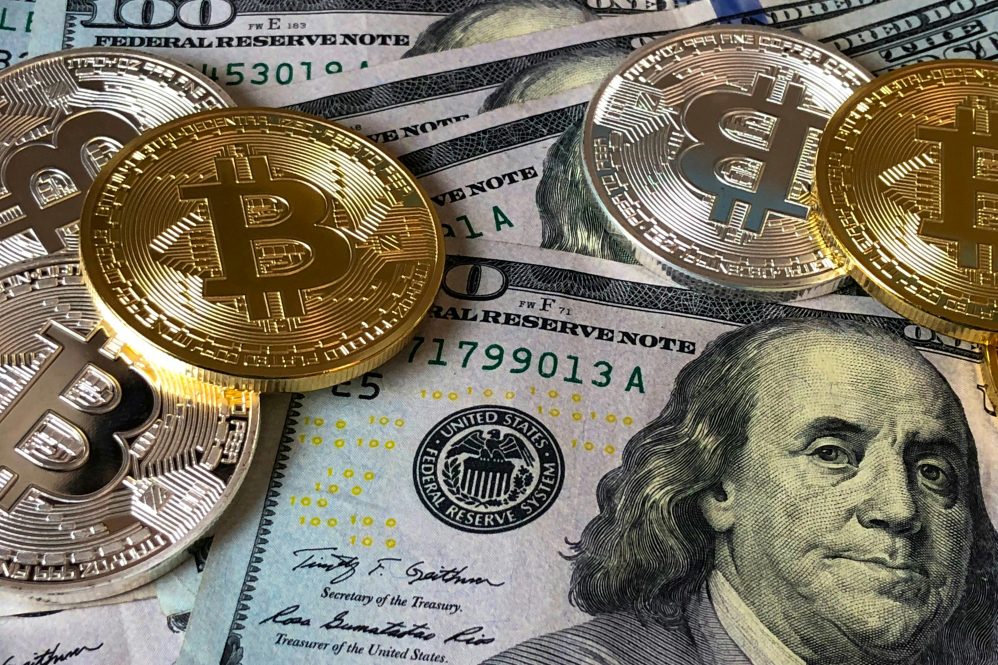
When you walk along Montana Avenue in Santa Monica and overhear a conversation about Bitcoin, you might think you are listening to philosophers at a diner rather than investors on a street corner. That isn’t because Bitcoin is mysterious. It is because it has nudged us into talking about money in ways we once thought belonged to textbooks and computer screens. Instead of price lists that start and end with fiat currencies like the dollar or euro, you now hear people toss around terms like Bitcoin value, scarcity, and decentralised finance with a familiarity that would have seemed odd not long ago. Critics and proponents alike focus on Bitcoin’s price as though it were a compass for the future of money itself.
In this evolving language of value, price comparisons between conventional money and Bitcoin have become an everyday reference point. Traders and commentators talk about USD to BTC conversion rates with the same fluency once reserved for currency markets at financial institutions. These mentions reflect a shift in how value is framed. Instead of thinking only in terms of the United States dollar, people increasingly think in Bitcoin units, or Satoshis, when they compare purchasing power or costs for goods and services in digital markets. That change in focus tells you something about how society’s description of money is broadening and, in some circles, splitting into two distinct dialects: old-school fiat speak and Bitcoin speak.
How Bitcoin Entered Everyday Conversation
It doesn’t take a trader in Santa Monica to notice that Bitcoin has entered everyday talk about wealth and investment. Once it was confined to niche forums and the back pages of financial sections. Now it appears beside stories about retirement funds, macroeconomic policy, and even inflation. Deutsche Bank analysts recently suggested that Bitcoin’s volatility is likely to decline as adoption grows, even while fiat currencies remain under pressure from global economic shifts. In plain language that we can all relate to, that means people are talking about Bitcoin not just as an odd tech novelty but as an emerging part of portfolios and financial planning.
The way we talk about Bitcoin’s value is also shifting away from the old model where money was only a promise backed by a government. Bitcoin is a network that functions without a central issuer, secured by computing power and consensus from nodes around the world. What that means is that your conversation about money now entwines technology and trust in ways that were unnecessary a generation ago.
A Cultural Shift in Money and Value
Language matters because it shapes thinking. When a news headline proclaims that Bitcoin has become the world’s fifth largest asset class by market capitalisation, it does more than capture price performance. It reshapes how people describe money, value, and wealth in public discourse. Bitcoin overtook trillion dollar companies and traditional assets in size, giving new shape to what counts as significant in global finance. That is context that influences how newspapers, TV shows, and cafés across Santa Monica and beyond describe money to their audiences.
For older generations, money was straightforward. You earned it. You saved it. You spent it in bricks and mortar. In recent years, Bitcoin forced a rethink about what “saving” means when people talk about scarcity. Its fixed supply of 21 million coins is often compared with the seemingly endless printing of fiat money by central banks. Recent commentary by Federal Reserve leadership acknowledged this reframing, likening Bitcoin to digital gold in the way people think about stores of value. This comparison alone changes the language around savings from purely national policy to something that also includes digital scarcity.
What Investors Hear and Say
When a group of friends mentions Bitcoin at lunch, they might use phrases that would have been incomprehensible a decade ago: decentralised ledger, proof of work, scarcity narratives, or hedge against inflation. These words reflect how value is being discussed in every stratum of modern finance. Researchers have even begun to examine the relationship between Bitcoin price movements and broader social variables like political uncertainty and information entropy, indicating that the language around Bitcoin has become a subject of academic inquiry.
This shift matters because money is itself a system of communication. It is a shared agreement about what something is worth. Bitcoin’s rise has forced us to unpack that agreement, letting new metaphors and comparisons into how we speak about what we value.
How leaders describe Bitcoin’s impact
Richard Teng, chief executive officer of Binance, put it this way: “Global adoption often starts with a single domino. Now that crypto is being recognised as a legitimate financial instrument within one of the world’s largest retirement systems, the question is no longer what but when.” This remark is not merely about price or adoption. It is a comment on how Bitcoin has entered the language of mainstream finance and will continue to influence it. The suggestion that retirement systems view Bitcoin as a legitimate financial instrument shows how even the most established sectors of finance are adapting their vocabulary to include digital assets.
In a separate insight, Yi He, co-founder of Binance, said “Crypto isn’t just the future of finance it’s already reshaping the system, one day at a time.” When an industry leader speaks of reshaping systems, she is pointing to a deeper change than rising charts. She is highlighting how the fundamental words we use to describe money and financial systems have been altered by Bitcoin’s presence in markets and public discussion.
How This Matters to You
For readers in Santa Monica and beyond, this change in language may appear subtle at first. But it reflects something real. Money was once spoken of primarily in terms of dollars, yen, and euros. You thought in those units and lived by those units. Now Bitcoin has inserted itself into the vocabulary of value. You see its price next to global equities in financial news. You hear it compared to gold. You explain Bitcoin using phrases that sound abstract but have meaning because they describe how people allocate their savings and expectations of future worth.
Most transactions still occur in conventional currencies. But Bitcoin has given us a richer language for talking about risk, scarcity, decentralisation, and trust. In doing so, it has reshaped the discourse of money itself. And in that reshaped language, you find clues to how people think about value today and how they might think about it in the years to come.