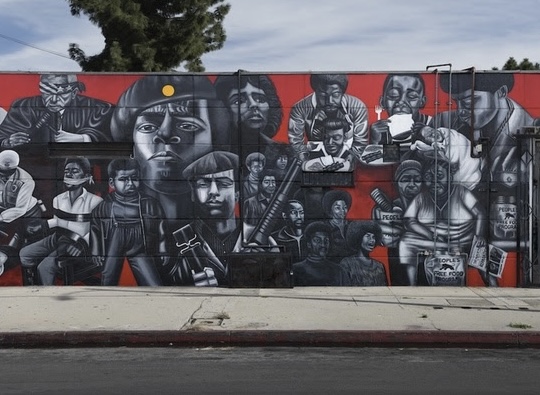
Olabisi, who died unexpectedly in 2022 at age 68, was best known for murals that addressed racism, police violence and Black life in Los Angeles
Loyola Marymount University’s Laband Art Gallery has opened the first institutional exhibition devoted to the work of Noni Olabisi, an artist and muralist whose paintings and large-scale public works became landmarks in South Los Angeles communities.
“Noni Olabisi: When Lightning Strikes” opened Thursday and runs through March 28. The exhibition brings together more than 40 works created between 1984 and 2022, spanning Olabisi’s career as a painter, muralist and mentor. A free public reception is scheduled for Feb. 7.
Olabisi, who died unexpectedly in 2022 at age 68, was best known for murals that addressed racism, police violence and Black life in Los Angeles. Among her most recognized public works are “Freedom Won’t Wait” (1992), created in the aftermath of the Los Angeles uprising; “To Protect and Serve” (1995); and “Troubled Island” (2003). Her work frequently combined vivid color, figurative imagery and historical references to depict both collective trauma and resilience.
Curators say the exhibition emphasizes Olabisi’s commitment to portraying contemporary Black life with dignity and urgency. Her subjects ranged from civil rights figures such as Malcolm X to members of her own family. Across her work, recurring visual elements include hands, symbols of birth and renewal, and a small yellow dot placed on her subjects’ foreheads, which Olabisi described as representing the sun and human connectedness.
Several paintings from Olabisi’s final artist residency at Arts at Blue Roof in South Los Angeles are included. The residency marked a period of personal and artistic growth shortly before her death.
Born in St. Louis in 1954, Olabisi moved to Los Angeles as a child and lived there for nearly six decades. She studied at Los Angeles Southwest College and was largely self-taught. In addition to exhibiting widely, she collaborated with organizations including the Social and Public Art Resource Center, L.A. Commons and the city’s Department of Cultural Affairs.