
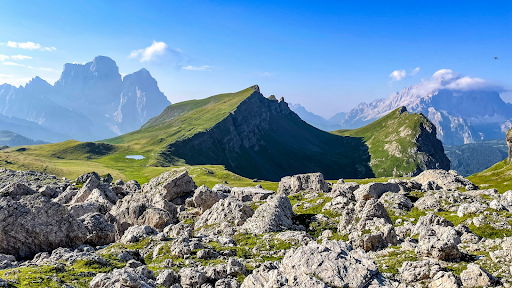
Dolomites often looks complex from the outside. The peaks are sharp, the rock faces dramatic, and the maps appear dense with trails.
But once you spend a few days walking there, the experience settles into a rhythm that feels natural and easy to follow. Each day builds on the same basic structure, and the region’s layout quietly supports you without demanding constant decisions. Instead of feeling like you’re managing a complicated alpine environment, you find yourself moving through days that flow smoothly from morning to evening. This is how daily hiking in the Dolomites actually comes together on the ground.
The Terrain Sets a Steady Pace Early On
Once you’re on the trail, the terrain encourages a comfortable rhythm. Paths often begin gently, allowing your legs to warm up before any sustained climbing begins. Even when elevation gain is involved, it usually comes through switchbacks or gradual traverses rather than sudden steep pushes.
This pacing matters more than many people realize. It prevents early fatigue and makes it easier to maintain energy throughout the day. You rarely feel rushed or pressured to move faster than is comfortable. The landscape supports steady movement rather than forcing intensity.
Scenery Builds Gradually Instead of All at Once
One reason the Dolomites feel so manageable is how the scenery unfolds. You don’t step straight into extreme exposure or overwhelming views. Instead, the landscape opens up in stages. Forests give way to meadows, meadows lead to higher slopes, and eventually the rock towers come into view.
Navigation Fades Into the Background
As the hours pass, navigation becomes almost invisible. Trail markings are consistent and frequent enough that you stop actively thinking about them. You follow signs, confirm directions at junctions, and keep moving. The mental effort required is minimal.
This is one of the most understated advantages of hiking in the Dolomites. When navigation doesn’t demand attention, you conserve energy for walking itself. Your focus stays on footing, pace, and enjoying the surroundings rather than on constant decision-making.
Evenings Are Predictable and Restorative
Evenings in the Dolomites follow a similar pattern day after day. You eat a filling but simple meal, review the next day’s route, and rest. There’s little pressure to do more. The physical effort of hiking naturally leads to early nights and quiet routines.
This consistency is part of why daily hiking comes together so well. You don’t need to reinvent your approach each evening. The rhythm repeats, allowing your body and mind to settle into the experience.
The Days Connect Without Feeling Repetitive
Although the structure stays consistent, the days don’t feel repetitive. Each route offers slightly different terrain, views, and pacing. Valleys change, peaks shift, and perspectives evolve as you move through the region.
The repetition exists only in the supportive framework, not in the experience itself. This balance keeps multi-day hiking engaging without becoming exhausting.
Independent, the Flow Stays the Same
Whether you hike independently or choose Dolomites hiking tours, the daily rhythm remains largely unchanged. The region’s infrastructure does most of the organizational work for you. Routes make sense, distances are reasonable, and support points appear where you need them.
This means that the hiking experience doesn’t depend heavily on how it’s organized. The landscape itself provides the structure.
Why the Dolomites Feel So Natural Day After Day
Daily hiking in the Dolomites works because nothing fights against the hiker. Trails follow the land logically. Huts appear when you’re ready for them. Villages sit where they’re useful. Transport fills the gaps without intruding on the experience.
The result is a hiking rhythm that feels natural rather than engineered. You wake up, walk, rest, and repeat without stress or complexity. Despite the dramatic appearance of the mountains, the experience beneath your feet is calm, structured, and remarkably easy to settle into. That is what makes hiking in the Dolomites feel so intuitive once you’re actually there.