Our city is currently coming through a cycle of decline, hoping to enter a more ascendant phase. But it is encountering two major headwinds that, in spite of everyone’s best efforts, do not augur well for our future.
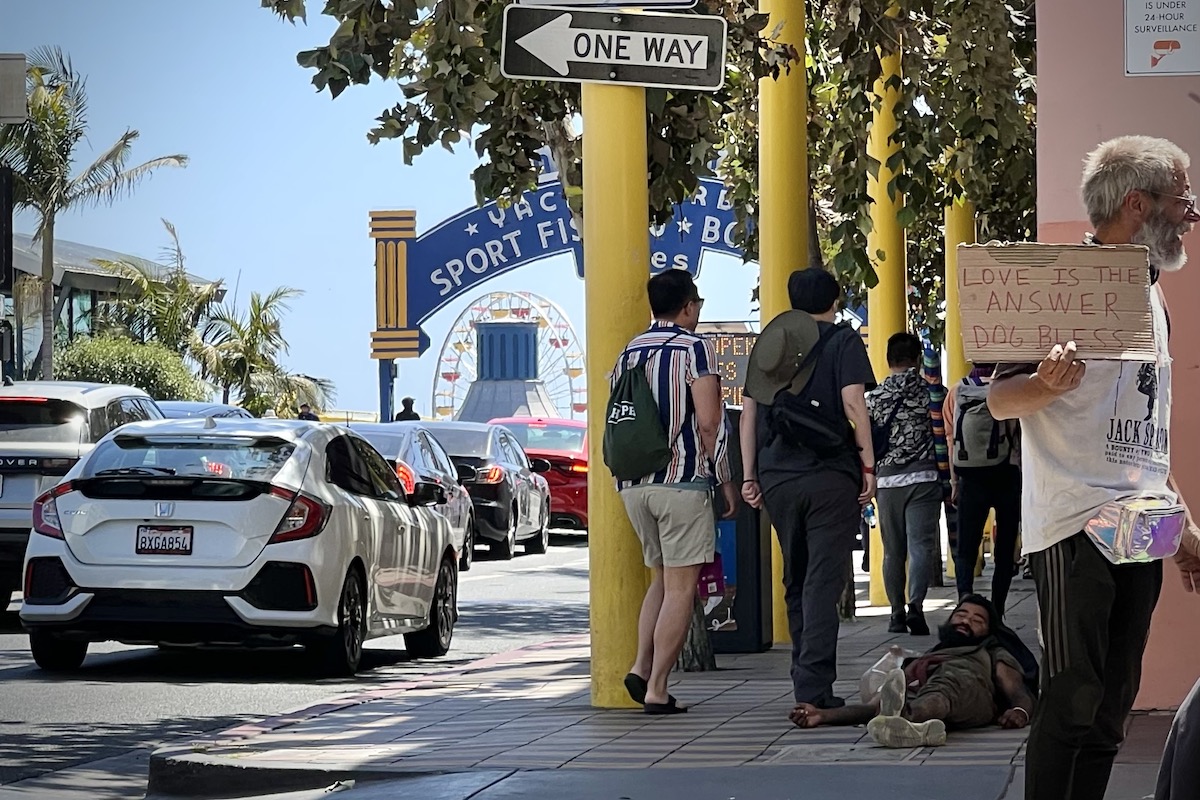
A city as dependent on tourism as we are has always been vulnerable to the “normal” fluctuations of tourism. Anything that reduces tourism (e.g., Covid, unfavorable exchange rates, or changes in tourist fashions), hurts our City’s future. In the past, we have built a reputation, particularly downtown, for grinding homelessness with its associated social problems of drug addiction, mental illness, and crime. We have fortunately made some recent progress in these associated problems: crime reduction is responding by better enforcement, but it is a slow comeback before we can restore our public reputation as a clean and safe City. In public perception, a few shocking incidents can undo months or even years of slow reputational healing, so any tourism recovery is inevitably fragile at its beginning. Now there finally seems to be good alignment from the Council, the City manager and on down, that this is a significant problem that must be addressed. However, there is a larger countervailing hazard that, with tariffs, rampant federal xenophobia, and unnecessary wars, our improvement in tourist inducements is being canceled by these larger Washington forces we have no control over. Just the global impact of an oil/natural gas interruption can destroy our local and the worldwide tourism industry.
Another area of counteractive headwinds is the housing debacle unfolding in our City primarily caused by Sacramento’s recent flood of bad housing laws. Fraudulently sold as creating affordable housing, Sacramento’s mandate to build 9000 new units in 8 years is now fully rearing its ugly head. Santa Monica’s natural growth of 1100 units over 8 years (including a substantial number of affordable units) had been well accommodated in the last few years. Obviously, we would like to have built more deed-restricted affordable units in the past, but we have built the requisite number of affordable units given the actual limited financial resources available.
Naturally, the number of affordable units has never been sufficient to meet all the needs of the shrinking buying power of middle-income and lower-income residents. In other words, the housing crisis was never based on the number of units, as ballyhooed by Sacramento, but on the affordability of those units. As the cost of producing a single affordable unit has increased faster than the rise of the medium income, affordable housing has become a mirage. In short, you cannot build your way to housing affordability in Santa Monica since the residents’ income is not increasing faster than the cost of building or, heaven forbid, buying those units. But Sacramento’s requirement that we put housing production on steroids, without providing any funding to actually meet those goals, inevitably collided with reality, the same way that Washington’s confused war on Iran collided with the reality of the Strait of Hormuz.
So in a City of declining birthrates, of declining household formation, of increasing deportation of residents, of collapsing immigration (except for Palisades fire refugees), of massive flight of residents to other states, of declining employment, of a 10% rental vacancy rate, of astronomical construction costs, of high construction interest rates, and of underwater state and local budgets, Sacramento has, in its infinite wisdom, chosen this specific time to order our City to increase our natural unit construction by a factor of eight times for a non existent population growth. Just as attacking Iran was predictably going to crush the world economy by choking off the world’s energy access through the Strait of Hormuz, it is equally predictable that Sacramento’s massive mandatory upzoning would lead to a flood of vacant high-end units.
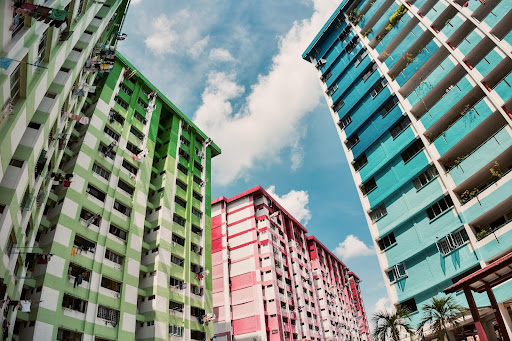
Today, there’s massive oversupply of tiny very expensive high end new units with insufficient parking (one of the many bad laws from Sacramento was to mandate the elimination of housing parking requirements). Virtually none of this flood of econoboxes are 3-bedroom units (the Gelson’s project in Ocean Park Blvd has 520 units, but not a single 3 bedroom apartment) so those kinds of projects will continue shrinking the local school enrollment.
There is a way out of this oversupply jam, but it’s a brutal process. The absorption of these high end units will take years for us to find enough upper end renters willing to spend huge fraction of their income for these microscopic units. During these absorption years, all the other rental providers will be forced to give away months of free rents to try to woo new wealthy tenants while existing overextended housing providers will see their properties foreclosed on by their lenders. The foreclosing banks will then turn around and sell the recently foreclosed buildings at a reduced price to new “bottom” feeders. You would think that would be a perfect time for the local non-profit housing providers (e.g., Community Corp) to pick up new rental properties for a song. But likely the state and local cities are broke, so they cannot compete with better-funded private “bottom feeders”. So those properties, although now with hopefully cheaper rents, will be consolidated into ever larger and distant extractive corporations.
Of course, none of these new 6-8 story buildings will be sustainable or resilient net-zero buildings. In fact, their very presence will preclude their neighbors from becoming resilient net-zero buildings because of their perpetual shading by their oversized neighbors.
Of course, let’s not mention the disastrous water extraction and mobility loads generated by all this overbuilding. Such policy failures are invisible to the housing ideologues.
And of course, there is no provision for unit ownership in Sacramento’s oversupply mandates.
Finally, just like Trump is digging himself (and us) into a deeper hole in Iran, Sacramento also continues to dig us into a deeper hole. Assembly member Rick Zbur now wants to gut the Coastal Commission for more private exploitation of coastal resources that should be preserved in perpetuity for the public good. As these policy failures become more visible, the authors of those failures will always claim that any failure was because we did not bomb enough or did not gut local zoning enough. However, in reality, when in a hole, self-inflicted or otherwise, the best thing to do is stop digging.
Because Iran’s danger to the Strait of Hormuz have been known for decades, the alleged reason for the war had to be clouded in a flurry of lies. Likewise, the well-known failure of unfunded mandates to produce any realistic housing benefits required that Sacramento’s destruction of local zoning be justified by the lie that local zoning was impeding the production of affordable housing. We should not be surprised that both initiatives, based on lies, will result in clear policy failures with unintended disastrous consequences.
So Trump and his enablers fiddle while the Middle East still burns (not withstanding a leaky ceasefire), and Sacramento fiddles while Santa Monica burns with no credible affordable housing path forward but with lots of upper end apartments. It’s clear now how spring in Santa Monica has suddenly turned into winter.
By Mario Fonda-Bonardi for
S.M.a.r.t.: Santa Monica Architects for a Responsible Tomorrow
Dan Jansenson, Architect, (former Building & Fire-Life Safety Commissioner); Robert H. Taylor, Architect AIA; Mario Fonda-Bonardi, Architect AIA (former Planning Commissioner); Sam Tolkin, Architect, (former Planning Commissioner); Michael Jolly ARE-CRE; Jack Hillbrand AIA, Landmarks Commission Architect; Phil Brock (SM Mayor, ret.); Matt Hoefler, Architect NCARB; Heather Thomason, community organizer, Charles Andrews columnist. journalist.