
There are very few certainties in life. Barring tragedy, one is that we age. Our bodies, minds, and social world all change as we grow older. For some people, these changes can be remarkably subtle, whereas for others the passage of time is accompanied by turbulence and devastation. Aging can also be a time of exploration. Many older persons are financially comfortable with fewer pressing responsibilities. With retirement and the departure of grown-up children, the later years can be filled with opportunities for growth and learning. And contrary to popular belief, older persons do not simply sit around and dwell remorsefully about the past. Most are active, engaged, and doing the things they never had time for.Of course, health becomes more important as we age. Health-related issues of aging fall into three categories. First, everyone undergoes some normal changes associated with aging. Most of these are minor, such as the graying and thinning of hair. Some memory changes are also universal, including the slowing of retrieval of names and telephone numbers — the “tip of my tongue” phenomenon when the answer’s right there in our brain but we can’t find the words until someone prompts us or it comes to us a couple hours later. The second type of health issue is disease. As we age, we accumulate chronic diseases such as high blood pressure (hypertension), diabetes, heart failure, and arthritis. About four in five persons aged 65 years or older live with at least one chronic disease. Although some may be preventable by good health and lifestyle habits, others are determined by our genes, environmental factors, and many other causes that we still do not fully understand. More recently, UCLA and other researchers have been examining the wear and tear on our organs as we grow older, even in the absence of disease. This concept of damage before diseases have been diagnosed, or “allostatic load,” can take its toll on longevity and ability to perform daily tasks. Finally, lifestyle and conditioning are exceptionally important determinants of health in older age. Physicians commonly use a term called “deconditioning” to describe the loss of strength accompanying inactivity, whether related to an acute illness, hospitalization, or simply due to too much time sitting on our bottoms. Some recent research suggests that the mind also may benefit from activities such as crossword puzzles and board games, rather than the more passive television watching.The more we learn about aging, the more we realize that it is not a passive process. Each of us can take an active role in determining how we age and how to make the most of our later years.
You might be interested in …

Highlights from Pacific Palisades’ First-Ever Motor Classic Event (Video)
The event drew thousands of visitors to the Palisades Village Green for a day of cars, community and fundraising in support of the Lowe Family YMCA

MLS.com
18-Bed Mar Vista Complex The Caswell Lists for $8.2M
The building was developed after Los Angeles’ Rent Stabilization Ordinance cutoff date and is exempt from both the city’s rent-control rules and California’s statewide rent cap law. A recently built apartment property in Mar Vista […]

Where great minds grow at The Willows Community School (Video)
The Willows, a DK-8 co-educational school, enrolls 470 students from 51+ zip codes annually. As a balanced, progressive educational leader, experiential learning, technology, and arts are integrated into cutting-edge curriculum. We believe each child brings our community […]

Instagram: @gottsroadside
Gott’s Roadside Sets Opening Date for Santa Monica Location
Gott’s Roadside serves a menu of burgers, sandwiches, salads, tacos, organic shakes and other items, along with a selection of California wines and craft beers. Gott’s Roadside has set a fall 2026 opening date for […]

Traffic Stop in Santa Monica Leads to Forgery, Identity Theft and Drug Arrest
Officers conducting the traffic stop discovered that the driver had an outstanding warrant related to forgery. A routine traffic stop in downtown Santa Monica resulted in the arrest of a driver wanted on a forgery […]
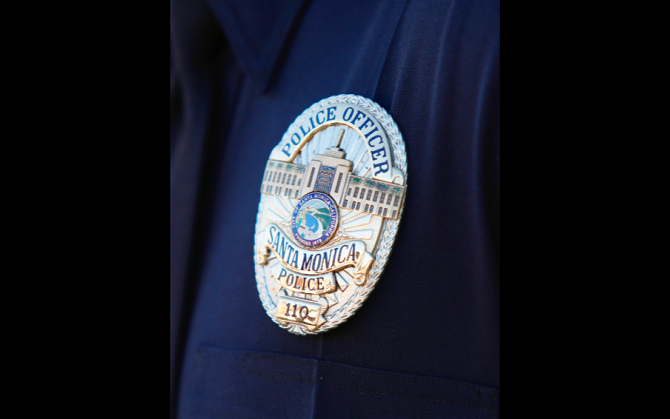
Santa Monica Police Department Shield. Photo Credit: SMPD
Santa Monica Place standoff ends safely after mental health crisis response
Crisis negotiators successfully de-escalated the situation at the shopping center. Emergency responders safely resolved a standoff at the Santa Monica Place shopping center Monday evening, taking an individual experiencing a mental health crisis into custody […]
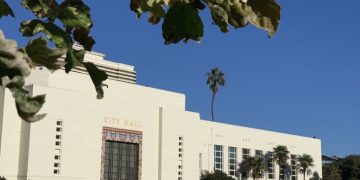
Santa Monica State of City Event to Feature Performances and Updates on the Realignment Plan
Mayor Torosis will deliver the address, outlining accomplishments from the past year and discussing priorities for 2027. Santa Monica will...
Read more

SM.a.r.t Column: The Dual Process, Part Three: The Line the Sea Is Moving Toward
The Part One article showed Santa Monica’s permitting delay as self-inflicted; Part Two, that the bill has shed its exemptions,...
Read more