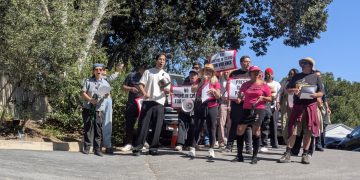
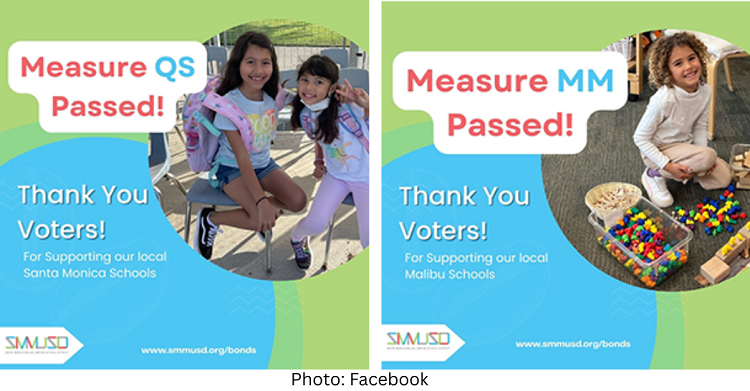

Twenty years ago, at dismissal time, school intersections bustled with parents and children, the afternoon ritual of family life. Last June of this year, during the many new mixed-use projects along Lincoln Blvd., I’d expect there were more construction workers than kids. Plus, there are a growing number of those kids climbing into cars with out-of-district permits, heading back to Culver City, Mar Vista, or Cheviot Hills.
Yet the 2024 US Census notes something else is missing— school-age children. Despite adding thousands of housing units, the interplay of demographic shifts, family composition, and economic constraints has led to a reduced demand for new three-bedroom units in Santa Monica, contributing to the broader enrollment decline observed in the local school district.
This isn’t anecdotal observation. It is demographic transition wrapped in the language of progress.
The Numbers That Haunt
Santa Monica Unified’s enrollment has collapsed from 12,000 students in 1990 to roughly 8,900 today. But that number conceals darker truth: up to 17% of those students—nearly one in six—don’t live here. They’re imported to mask an exodus that may otherwise force school closures.
The real number of Santa Monica children in our schools may be as low as 7,400, a substantial decline from a generation ago. This collapse occurred while adding thousands of housing units. The impossibility of that equation reveals everything. How does a city add housing while losing families? Simple: You erase a housing type for low to moderate-income families.
The Architecture of Exile
Walk any recent development and count three-bedroom units. You’ll find almost none—they comprise less than 5% of new construction. Studios and one-bedrooms dominate at 75%. The developer math is ruthless: three one-bedroom units generate $7,500 monthly from space that would yield $5,500 from a family apartment. That’s 36% more profit from the same concrete.
Consider the two teachers I know at Roosevelt Elementary. Combined income: $150,000. Their two-bedroom rent: $4,200 monthly. When their first child arrived, the cheapest three-bedroom demanded $6,000 monthly, requiring $240,000 annual income to qualify. They moved to Riverside. Their child will never attend the school where both parents teach. This story repeats too many times annually. We’re not losing families to better opportunities— we’re evicting them through economic engineering.
Memory as Urban DNA
Cities, as architectural theorist Aldo Rossi understood, are repositories of collective memory. This memory isn’t stored in museums or archives but embedded in the very fabric of streets, buildings, and daily patterns. Every neighborhood carries what he called “urban artifacts”—persistent forms that give structure and meaning across generations.
Santa Monica’s low-rise beachfront character, its human-scale streets, its multigenerational neighborhoods—these aren’t just aesthetic preferences. They’re the physical substrate of community memory, the DNA that makes a place recognizable to itself across time.
When we demolish a bungalow court where three generations learned to ride bicycles, we’re not just removing housing. We’re severing memory. When we replace family neighborhoods with studio complexes, we’re not adding density—we’re erasing the possibility of generational continuity. The city becomes what urbanist Jane Jacobs warned against: a place that cannot remember itself.
The Shadow Economy
The transformation of Lincoln Boulevard tells this erasure in shadows. Where two-story buildings once created a rhythm of light and air, an unbroken wall of eight-story structures now casts permanent dusk. Solar panels that powered homes sit useless after 2 PM. Gardens die. Property values fall 12-18% in shadow zones.
Yet each project claims to solve our purported housing crisis. What crisis? California’s Department of Finance consistently ranks Santa Monica among the state’s highest for residential vacancy—over 5,000 empty units, nearly 10% of housing stock.
We don’t have a housing shortage. We have an affordability memory shortage—a deliberate forgetting of what made this city livable.
The Educational Shell Game
The school district runs parallel deception. Facing enrollment collapse that should trigger consolidations and administrative cuts, they import students from other districts. These families pay zero Santa Monica school bond assessments while their property taxes support their home districts. We subsidize their education while our own families flee.
Why hide this? Because without imported students, the real catastrophe becomes undeniable. How do you justify school bonds when enrollment dropped 40% despite thousands of new units? A school official recently confided: “If residents knew how many kids in our schools don’t live here, while their own children can’t afford to stay, there would be revolution.”
The Palimpsest Becomes Blank Slate
Cities are palimpsests—manuscripts written over yet never fully erased, each era adding layers while preserving traces of what came before. Santa Monica was such a palimpsest: Native American trails became streetcar routes became boulevards, each layer enriching the next.
But current development doesn’t add layers—it scrapes clean. Every eight-story wall erases the human-scale rhythm that preceded it. Every family exiled takes irreplaceable memory with them. We’re not writing a new chapter; we’re burning the book.
The result? A city that Italo Calvino might have imagined in his “Invisible Cities”—except our invisibility isn’t fantastical but literal. The Santa Monica that generations knew is becoming invisible, replaced by something that occupies the same coordinates but lacks the accumulated memory that transforms space into place. As urban philosopher Kevin Lynch wrote, a city becomes illegible when its inhabitants can no longer form mental maps of it. Santa Monica’s children—what few remain—will grow up in a city they cannot read, cannot remember, cannot pass on.
We’re witnessing not development but erasure—the systematic deletion of collective memory in pursuit of maximum profit. The question isn’t whether this is intentional.
The question is: Who benefits from our forgetting?
[Next: Part Two – The Machine: How Santa Monica’s Memory Gets Deleted]
Jack Hillbrand , Architect, AIA
Santa Monica Architects for a Responsible Tomorrow
SMa.r.t. Leadership: Dan Jansenson (Former Building & Fire-Life Safety Commissioner), Robert H. Taylor, Architect AIA, Thane Roberts, Mario Fonda-Bonardi AIA (Former Planning Commissioner), Sam Tolkin (Former Planning Commissioner), Michael Jolly ARE-CRE, Jack Hillbrand AIA, Landmarks Commission Architect; Phil Brock (Mayor, ret.), Matt Hoefler NCARB, Heather Thomason, Community Organizer
For previous articles, see www.santamonicaarch.wordpress.com/writing