
Last August, thousands of impoverished New Orleans residents, mostly African American, suffered for days without food, water or shelter while armed Sheriff’s deputies blocked their way out of the city — where the Red Cross waited to help them. Many civil rights activists were quick to label it another example of vicious Southern racism, but Taylor Branch, winner of the Pulitzer Prize and author of the new Civil Rights Movement history book At Canaan’s Edge (see book review, page 11) has a different view:“I think the larger lesson of Katrina is that we have allowed the poor of all races to become largely invisible,” says Branch, “We have denigrated for two generations the potential of public service to create new hope for them.”Racism creates more exciting headlines, but Taylor Branch has been researching the Civil Rights Movement for three decades. As an historian, he examines issues from every possible angle, emerging with a thoughtful, complex view on how Dr Martin Luther King, Jr.’s work still impacts our society, almost half a century later.In At Canaan’s Edge, Branch gives a day-to-day account of the last three years of the 1960s Civil Rights Movement. His interest in civil rights began in 1969, working with the Voter Education Project in rural Georgia. His job was to find and hire local citizens to coordinate Black voter registration in the smaller communities. “At first I went to Baptist churches,” he remarks, “I think I was looking for the next Dr. Martin Luther King. But the people I ended up hiring were all midwives. I quickly discovered that they had the most natural authority in these remote Georgia counties.”Branch continues, “Coming into the movement as late as I did, four years after the passage of the Voting Rights Act, I saw that there was still work to be done. Black people had still not registered to vote in the Georgia counties where I was working.”Once he returned home to Baltimore, Branch’s diary during his time in Georgia became his first published article, and he had found a new passion – to research and write about the Civil Rights Movement. “I was very curious to know,” says Branch, “Where did this movement come from?”He wanted to write a different sort of civil rights book. Instead of focusing solely on Dr. King, he chose to use Dr. King as a jumping-off point, a way to profile the Civil Rights Movement from beginning to end.“I wanted to do something different as an historian,” Branch muses, “Instead of the usual analysis, I wanted to tell an epic story. I wanted to provide a narrative of absolutely everything that happened. I feel that we learn through stories, not through the abstractions and analysis present in most historical texts.”When asked about his favorite parts of At Canaan’s Edge, Branch talks about the countless civil rights heroes who never made it into the history books. He admires community leaders James and Diana Bevel, foot soldiers in Dr. King’s nonviolent army, working virtually 24 hours a day to register Black citizens in Alabama. Branch also mentions the white Unitarians and Catholics who were killed by segregationists and Klansmen simply for marching side by side with Black people in the Deep South.Indeed, the Civil Rights Movement was an age of martyrs and heroes, but Branch is careful to point out that the war in Vietnam and Dr. King’s death ended the movement prematurely. According to Branch, there is still much work to be done in the cause of social equality. He feels that individual communities all over the country can make a difference on both local and national levels. “After all,” he says “the Civil Rights Movement began in small groups all over the South. Young people got together in churches and private homes, and began asking each other, ‘What needs to improve in our society?’”Many would argue that real social change can only take place when a man like Dr. King rises up and leads people to freedom, but Branch disagrees. “King’s broad message of spiritual and democratic depth is an urgent high standard for all aspiring leaders,” he says, “but his movement also teaches us that ordinary citizens become indispensable heroes when they don’t wait for leaders at all.”In the weeks following Hurricane Katrina, Americans from every state offered spare rooms, cash, cars, child care and jobs to people they had never met before. Individuals, connecting via the Internet, clamored to help impoverished people who were formerly invisible. According to Branch, this instinctive, color-blind action is both a product of Dr. King’s legacy, and a first step in the next wave of true grassroots civil rights activism.
You might be interested in …

Toy Story 5, Tom Hanks, Tim Allen, Greta Lee. Photo Credit: Pixar
Film Review: Toy Story 5
FILM REVIEWTOY STORY 5 Rated PG102 MinutesReleased June 19th The Toy Story films look at life from a child’s eyes, and Toy Story 5 is no exception. We make a grave mistake if we think that […]

Getty
Road Repairs to Begin Tuesday in Palisades
Officials confirmed that Phase 1 starts on streets identified as priority areas. Road repair work in the community will begin Tuesday as part of ongoing recovery efforts, city officials announced. The Bureau of Street Services […]
Santa Monica Conservancy
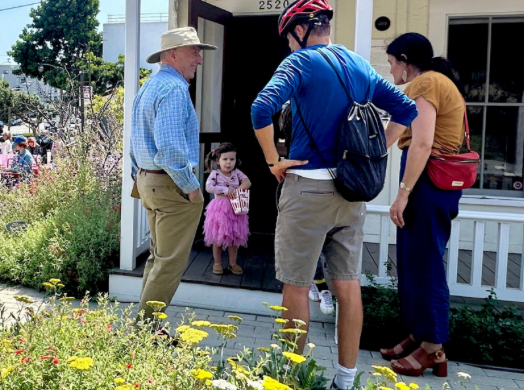
Summer Garden Tour to Highlight Native Plants, Coastal Ecology at Santa Monica’s Shotgun House
Event organizers noted that white sage smudging is a sacred Indigenous practice used for prayer and spiritual cleansing. Community members are invited to celebrate the start of summer with a guided tour of the Shotgun […]

Prescribed Burn Set for Santa Monica Mountains on Friday
The Los Angeles County Fire Department, in coordination with the Mountains Recreation and Conservation Authority, expects to burn vegetation near Santa Maria Road and Dirt Mulholland Road. Fire officials plan to conduct a prescribed burn […]
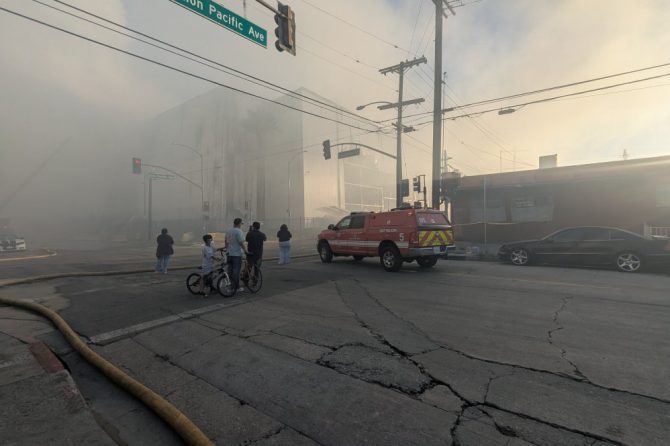
What the Lineage Logistics Fire really looks like (Video)
If you have been smelling smoke since last week, it is from the fire at the Lineage Logisitics Fire in Boyle Heights. The fire in a cold storage warehouse has been burning since last Wednesday, […]
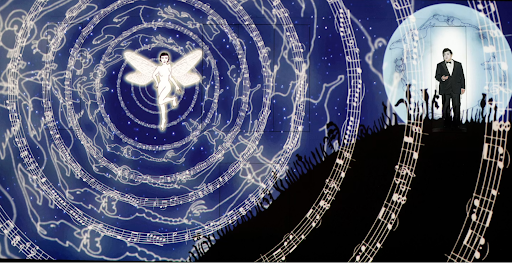
LAST NOTES OF “THE MAGIC FLUTE”
Noteworthy 6/17-24/26: SUM
By CHARLES ANDREWS COVER IT UP! PRETEND! LIE! Yes, exactly what a spoiled five-year-old would do when caught at something he knows is wrong. Trump posted last August that he thought his name should be […]
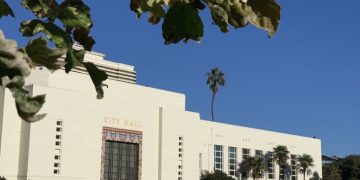
Santa Monica State of City Event to Feature Performances and Updates on the Realignment Plan
Mayor Torosis will deliver the address, outlining accomplishments from the past year and discussing priorities for 2027. Santa Monica will...
Read more




SM.a.r.t Column: The Dual Process, Part Three: The Line the Sea Is Moving Toward
The Part One article showed Santa Monica’s permitting delay as self-inflicted; Part Two, that the bill has shed its exemptions,...
Read more