

One question echoed through City Hall’s chambers Tuesday night, asked almost four dozen different ways by four dozen different residents who stayed until nearly 1 AM: Why is this Council going beyond the already transformative state laws on housing density?
The ostensible issue was a re-vote on several housing-related local Santa Monica laws—none of them required by state law—that were passed or initiated while Jesse Zwick, one of our council members, had a conflict of interest between his day job as a lobbyist for a housing organization and his role voting on housing in the best interest of Santa Monicans. But underneath that issue, at its heart, was this question that united residents who showed up to comment…
Not opposition to housing. Not denial of any affordability problem. Just: why more than what’s already mandated, which is considerable?
823 pages of public comment arrived before the meeting. The chambers were full. The meeting was so long that many who had wanted to stay to speak had to go home. But many people stayed, asking their own version of this same question.
No clear answers were given, but one did emerge.
What One State Law Already Does
A new state law, SB 1123, went into effect in July. R1 lots can now be subdivided into parcels as small as 1,200 square feet, each with a starter home—up to five homes of 1,750 square feet on a typical lot.
This is already transformative. Already enabling substantially increased density. The law just took effect.
What the Council Wants to Add
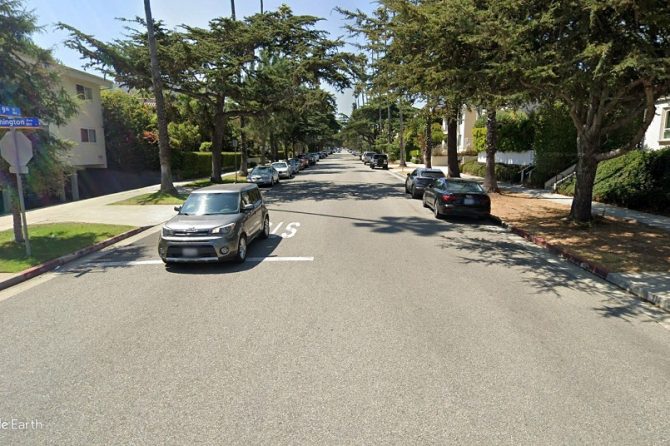
The new state law only requires that normal local zoning standards apply to these new, smaller parcels. But our City Council has been quietly trying to piggyback off the new law, and to use the opportunity to amend our local zoning in several parts of Santa Monica: Sunset Park, Pico Neighborhood, NOMA, and Northeast. These neighborhoods would now be allowed to build 3 stories, with 50% more building area, and reduced setbacks. This represents density beyond what even R2 neighborhoods allow.
The main justification offered Tuesday night came from Dan Hall: we might need three stories to fit three bedrooms.
Something about that didn’t sit right. I grew up in a modest 1,377 square feet with four bedrooms. We had space. We had life. Nationally, three-bedroom apartments average 1,336 square feet (according to RentCafe). Three-bedroom townhouses under 1,750 sq ft are abundant in LA. Councilman Hall’s reasoning doesn’t hold up and suggests a disconnect from how most families actually live.
Some on the Council raised “affordability.” But the whole point of SB1123 is to make smaller houses, smaller parcels, more affordable. If you’re dividing a lot into 3, 4, 5… up to 10 starter homes (currently allowed on larger lots by SB1123), you’re inherently making the market more accessible to a wide range of incomes. This is already accomplished by the state law.
The logic doesn’t add up. But the math does. More square footage per lot means more revenue per project. Developers want maximum returns – that’s their business model. SB1123 relies on their profit motive to achieve its direct goal of density and its hopeful, secondary goal of affordability. Its proponents believe one will lead to the other. But the Council’s job is to balance those interests with residents’ concerns and responsible growth. Not to further maximize the opportunity for developer returns.
How We Got Here
The new local SB1123 ordinance started, at least in part, with a developer’s email to Jesse Zwick suggesting these precise terms. Three stories. 50% more building area.
Then came the “emergency” ordinance last summer. It bypassed the normal course of review of the Planning Commission, bypassed the regularly required public process, and claimed urgency where none existed. It was an “emergency” for us to go to 3 stories and 50% more building area in these neighborhoods, beyond the scope of the state law that was being debated at the time. The ordinance became law immediately.
Except there was no emergency. That ordinance is now being challenged in court and unlikely to survive—it doesn’t meet the legal definition of emergency. (Which is presumably why the Council at this same meeting went ahead and rescinded the emergency ordinance, killing the lawsuit.)
Meanwhile, the FPPC ruled Councilperson Zwick conflicted on housing votes due to his Housing Action Coalition employment. Zwick is now barred from future housing votes. And previous votes had to be recast; the procedural foundation is compromised.
The Accountability Gap
In the days before Tuesday night, residents discovered what most had never heard about: this supersized SB1123 ordinance, going far beyond state requirements, representing a massive, unrequired change to their neighborhoods.
People were furious. Not just at the proposal – at the secrecy. The speed. The presumption. They weren’t opposed to SB 1123. That’s the law. People at the meeting didn’t argue against state law.
But one after another, they approached the microphone. They’d abandoned prepared statements, voices spilling out about the supersized ordinance: We didn’t vote for this. What about safety? Evacuation capacity? Why are you doubling the dosage before the patient has taken the first pill?
A Santa Monica High School student asked why the Council had unnecessarily upzoned a historic, two-story building – setting the stage for it to become an 85-foot apartment complex that’s 90% market rate. Why go beyond what’s required?
Around midnight, older residents fought to stay awake, taking notes to keep focused. They’d come this far. They weren’t leaving without being heard.
Lana Negrete entered with reason: don’t go beyond state law. The law just took effect. Let’s see what it does.
Then came what looked like agreement. Caroline Torosis and Ellis Raskin both declared they didn’t want to go beyond state law (except for requiring our standard AHPP housing fees). Torosis had voted yes on the emergency ordinance months ago, so this seemed like a change.
Torosis offered a motion that seemed to reflect that position. But Dan Hall and Natalya Zernitskaya amended it, twisted it until it became permission to study three stories after all. In the name of affordability and families. And Raskin, who’d just said he didn’t want to go beyond state law, voted for it. Joined Snell, Zernitskaya, and Hall in sending it forward.
The question keeps getting asked. It keeps not getting answered.
But the Evidence of the Answer was Everywhere on Tuesday
We saw photos of developer emails proposing the ordinance terms. One Councilman had to recuse himself from an important housing vote on Tuesday because his foundation gets office space from one of the biggest development financiers in town. There was testimony of developers texting with Council members during meetings. Some Council members no doubt genuinely believe they’re championing affordability—which makes the influence more troubling.
What this isn’t
This isn’t opposition to SB 1123—that’s the law. No one argued against it. This is residents of all backgrounds asking elected officials to justify going further than required. And noticing they won’t.
The Power of Showing Up
But Tuesday night proved something else. When residents show up in numbers, when forty-four people stay well past midnight, when 823 pages of comments create an undeniable record—the political calculation changes.
There was anger in that chamber. But there was also electricity. Solidarity. Voices raised in chorus are powerful.
Show Up
The Planning Commission will review this soon. Likely on February 18th at 6:00 p.m. We must all be there. Show up. Bring neighbors. Submit written comments.
State law already mandates enormous change. To go beyond it without evidence, without clear rationale, without answering why. This isn’t housing policy. This is developer-driven rezoning disguised as progress.
These are our neighborhoods. Our streets. Our city. Tuesday night, residents who’d rarely or never attended a meeting before were reading staff reports and tracking votes and staying well past midnight.
That’s how this changes.
See you there.
Heather Thomason, Community Organizer for SMa.r.t., Santa Monica Architects for a Responsible Tomorrow
Mario Fonda-Bonardi, AIA, former Planning Commissioner, Robert H. Taylor, AIA, Architect. Dan Jansenson, Architect, former Building and Life Safety Commissioner. Samuel Tolkin, Architect, former Planning Commissioner, Michael Jolly, AIR-CRE. Jack Hillbrand AIA, Landmarks Commission Architect, Phil Brock, former SM Mayor (Ret.), Matt Hoefler, architect, Heather Thomason. Community Organizer.