FILM REVIEW
THE BRIDE
Rated R
126 Minutes
Released March 6th
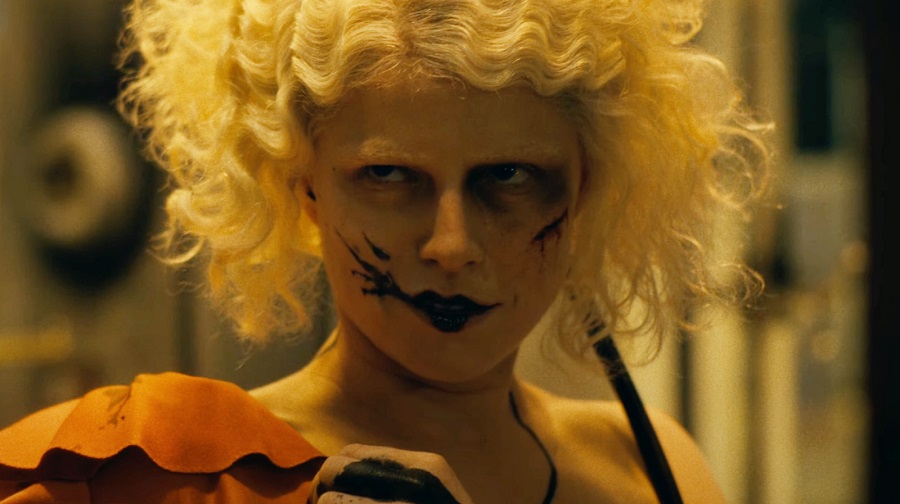
This movie is a trip! It’s a burst of demented personalities on a vengeful, highly misguided journey to survive and to find happiness. It is in the style of the avant-garde films of the late ‘60’s and early ‘70’s. Jessie Buckley stars as “The Bride.” Not many people know that Buckley is a triple threat performer (actor/singer/dancer) who, early in her career, was told that she would never be successful because she didn’t project enough femininity.
Well, the subtitle of The Bride could be “Jessie Buckley Lets Loose.” In this movie, the actress absolutely succeeds in displaying her unabashed, jubilant personality as “The Bride of Frankenstein.” It may be that Buckley’s unfiltered interpretation of the monstrous “Bride” makes some audience members uncomfortable, and the timing of the film’s release could be the problem.
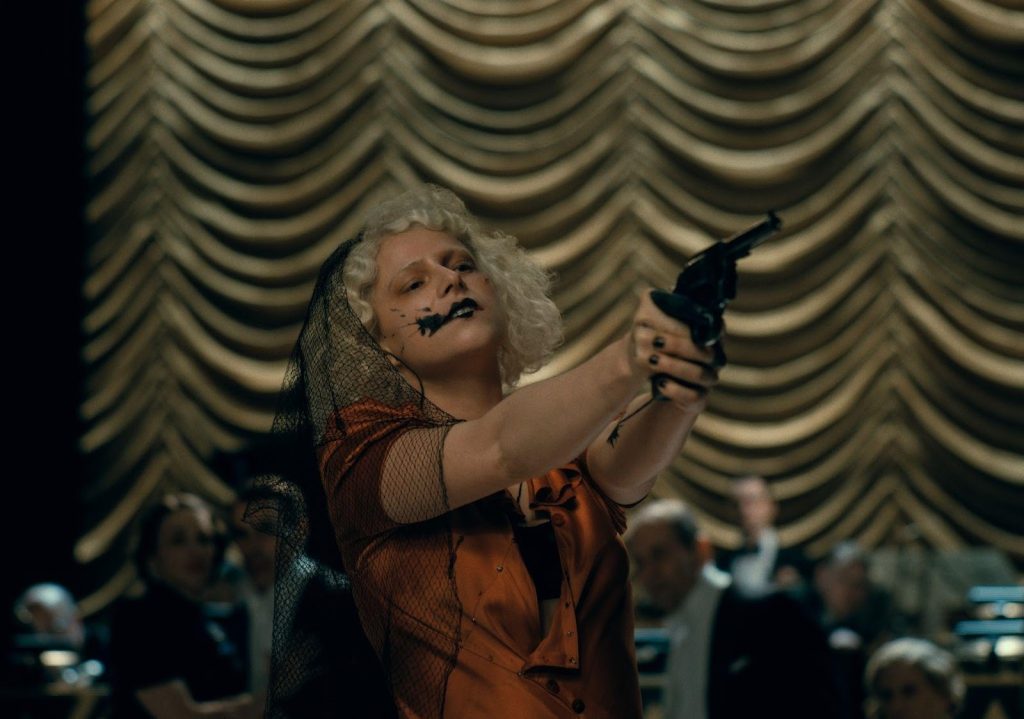
It has conflicted with the attention Buckley is receiving for a completely different type of character, “Agnes” in Hamnet. It is to Buckley’s credit that she can turn on a dime and give life to such opposing characters, but audiences may resist seeing the warm and caring Agnes now as a wild hedonistic specter.
Gyllenhaal had worked with Buckley previously on a film she wrote and directed in 2021, The Lost Daughter. Buckley’s career began after placing second in a BBC talent show series. She is a musician, singer, and dancer, starred in the London revival of Stephen Sondheim’s A Little Night Music, and performed at Andrew Lloyd Webber’s birthday show in 2008. She has played roles as varied as “Miranda” in Shakespeare’s The Tempest and a country music singer in the movie Wild Rose. Buckley is awesome as The Bride. This character could easily be made into a caricature, but the actress puts her heart into it and makes her come alive.
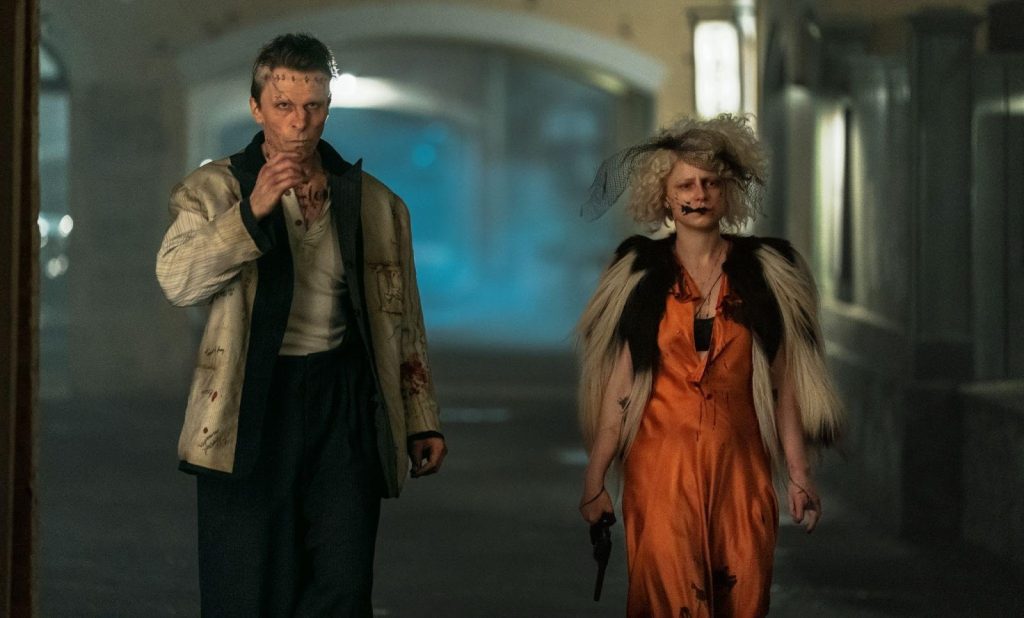
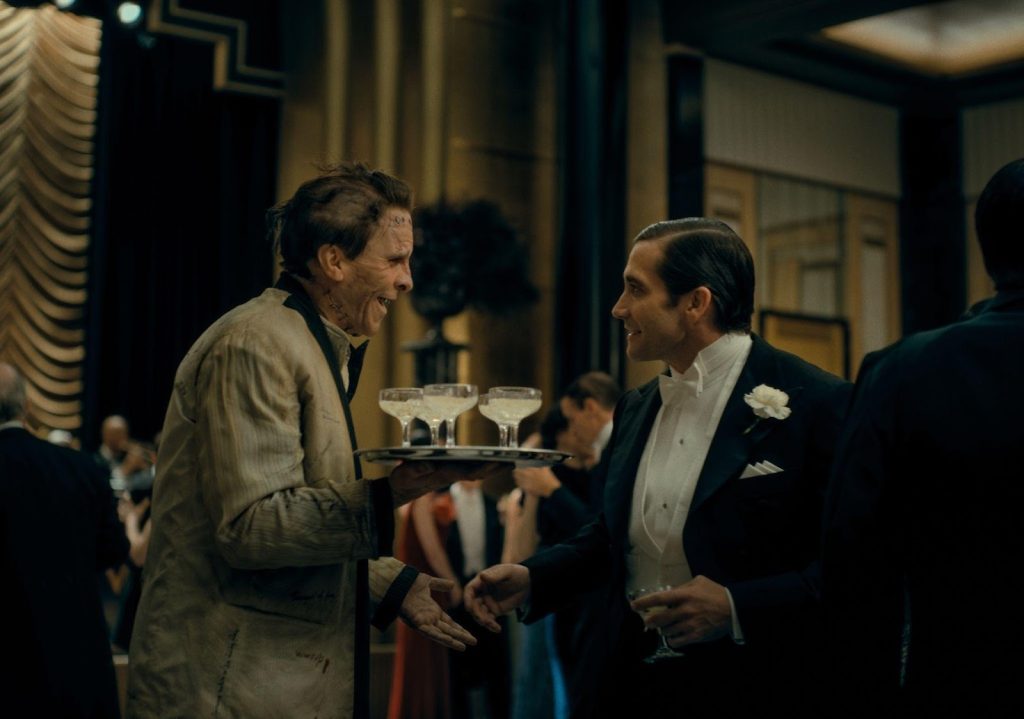
Opposite Buckley, one of my favorite actors, Christian Bale, plays “Frankenstein’s Monster.” As always, Bale is completely unrecognizable. He truly inhabits the monster, and when he says, “She’s too beautiful,” as he first glimpses The Bride, you believe him. Penelope Cruz is striking as a liberated female detective. Annette Bening and Jeannie Berlin camp it up as the Mad Doctor and her sidekick, and they’re a gas to watch. You won’t forget these characters.
The Bride pulls together different pieces of history, carrying the theme of bringing the dead back to life – a topic of human curiosity that will never cease to fascinate our collective imagination. The inspiration is taken from Mary Shelley’s novel titled Frankenstein; or, The Modern Prometheus, that she wrote in 1818 on a dare from friends, although within the strict social mores of her time, Shelley probably could not put on the page what she really wanted to convey.
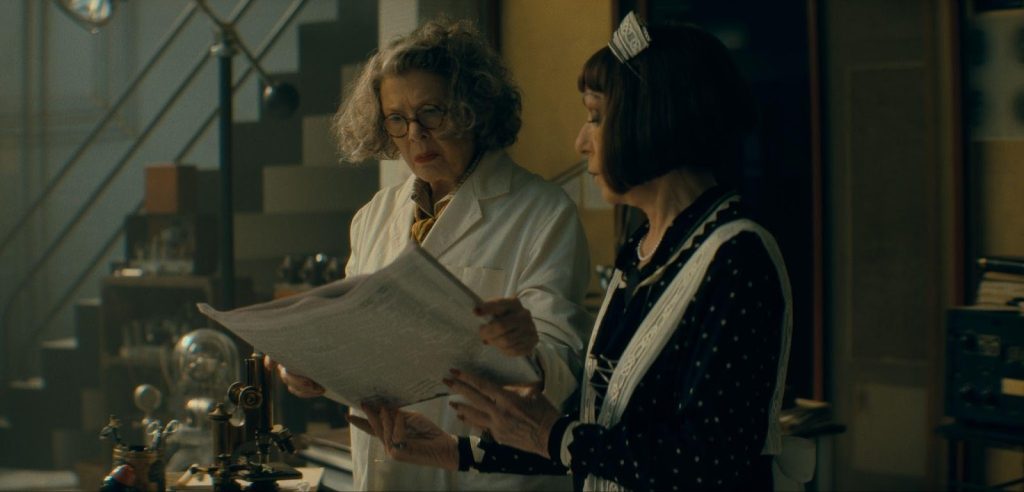
At least that’s what director Maggie Gyllenhaal believes. In making this film, Gyllenhaal hopes that she has come close to the tale that Shelley truly meant to tell. Shelley’s life had been filled with unbearable tragedy, and from that her tale of reincarnation was born. Her mother had died 11 days after her birth, and she was raised by her father. During her marriage to poet Percy Bysshe Shelley, she miscarried several times. In the movie, Buckley also plays “Mary Shelley” as the narrator, adding her thoughts to the story, probably thoughts that she could not say aloud in 1818.
The movie’s style is train-of-thought, and that train sometimes veers from its tracks, but the crazy characters and the camp images and outrageous exploits they conjure up pull you in. At one point, a macabre rendition of “Bonnie and Clyde” lights up the screen. Gyllenhaal chose early 1930’s Chicago as the setting for her film, a time of upheaval and rebellion against the strict moral standards of society.
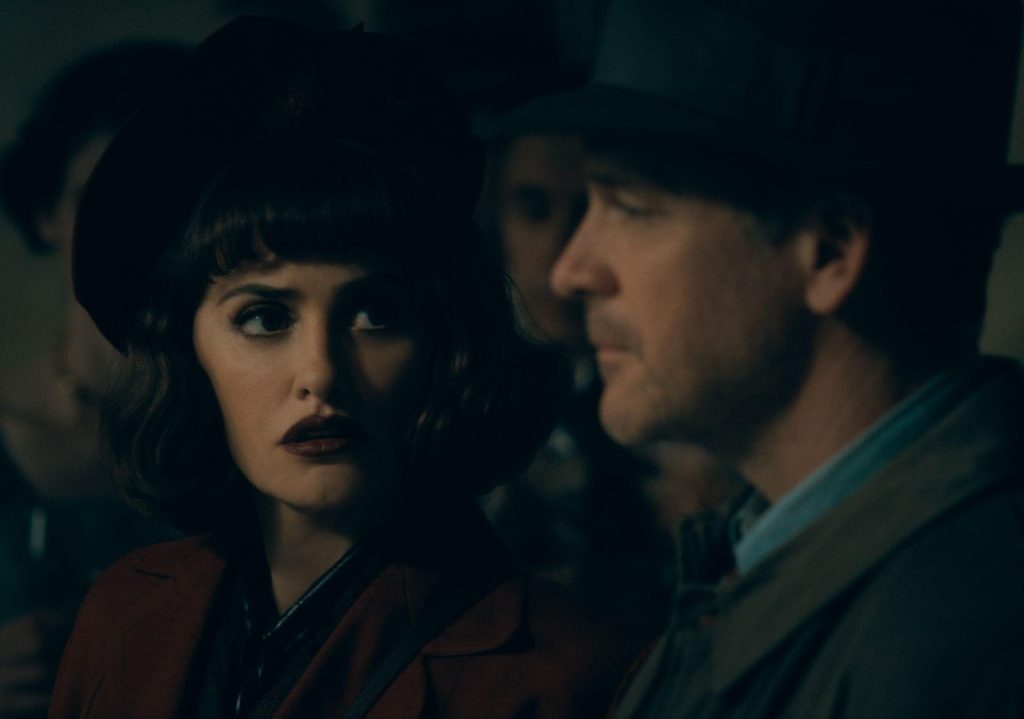
Production designer Karen Murphy and the costumers and makeup artists have meticulously recreated the behavior and style of this period, whose characters reveled in rebellion, flaunting scandalously short skirts and short hair at drunken parties with suggestive, wild, and crazed dancing. The choreography of the uninhibited parties is some of the best I’ve seen, and the musical numbers convey the hysterical energy of the time. The theme of repressed women winning retribution permeates the story.
Gyllenhaal’s inspirational muse for making this film was a guy she met at a party who had a tattoo of Frankenstein’s Bride on his arm. It made her wonder how significant this character must be to him that he wanted to display her permanently on his body. Buckley, speaking as Mary Shelley at the beginning of the film, wonders if the sequel she planned to write and never had the chance before her death in 1851, would be “a horror story, a ghost story, or, most frightening of all, a love story.” Jessie Buckley, you don’t have to play feminine; feel free to play outside the box.
Note that the Oscars will be handed out this Sunday, March 15th. To read my Oscars column, go to the March 6th edition of the Santa Monica Mirror, see social media, or click here.
Kathryn Whitney Boole has spent most of her life in the entertainment industry, which has been the backdrop for remarkable adventures with extraordinary people. She is a Talent Manager with Studio Talent Group in Santa Monica. kboole@gmail.com.