
If you want a bottle warmer that works away from the kitchen, the Momcozy bottle warmer is a strong convenience pick, especially for travel and overnight routines. It is not the best electric bottle warmer for every family, because safe warming still takes attention and cleanup matters more than the ads make it seem.
If you have ever stood in the kitchen at 2:00 AM trying to warm a bottle without fully waking the baby, a portable warmer sounds like the answer. Momcozy’s recent product claims say some models can heat small amounts of water in about 3 minutes and chilled milk in about 5 minutes, while third-party testing of a Momcozy portable model found about 6 minutes to reach 80°F and about 10 minutes to reach 98°F. This review will help you decide whether that tradeoff is worth it, and how to use one safely without making feeding cleanup harder than it needs to be.
What the Momcozy does well for busy parents
It solves a real timing problem
The plain truth is that babies do not care whether you are in the car, at a hotel, or halfway through washing pump parts. A portable electric warmer helps most when you need warm milk without a sink, stove, or outlet right beside you.
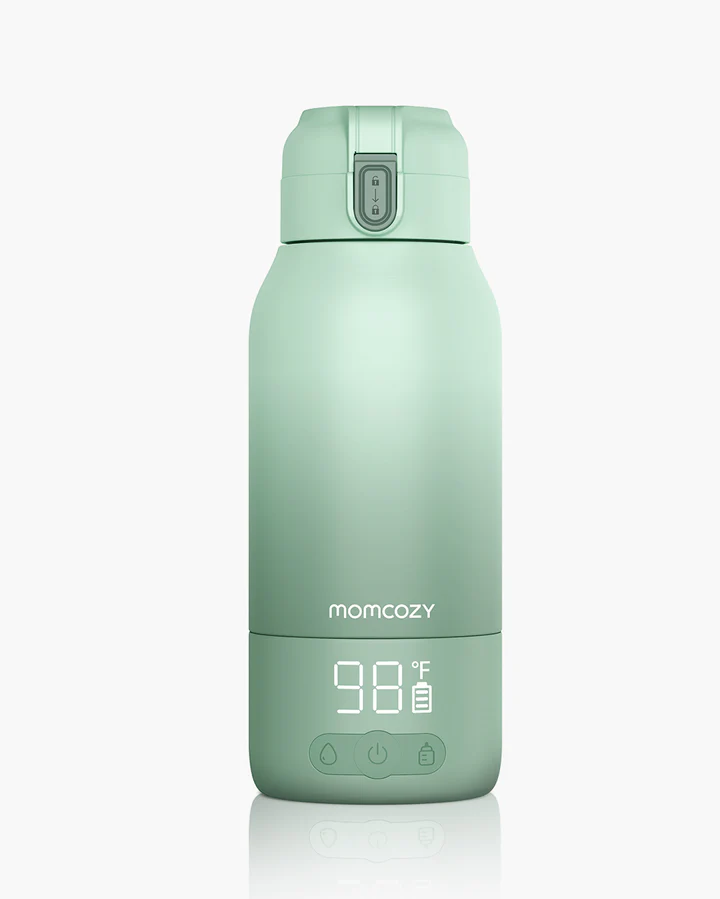
That is where Momcozy makes sense. Recent Momcozy travel warmer listings describe cordless use, battery power, and preset warming targets like 98°F and 104°F. In real life, that means less guesswork when you are away from home and less pacing with a crying baby while you wait for a mug of hot water to do the job.
It is more helpful for travel than for a full kitchen setup
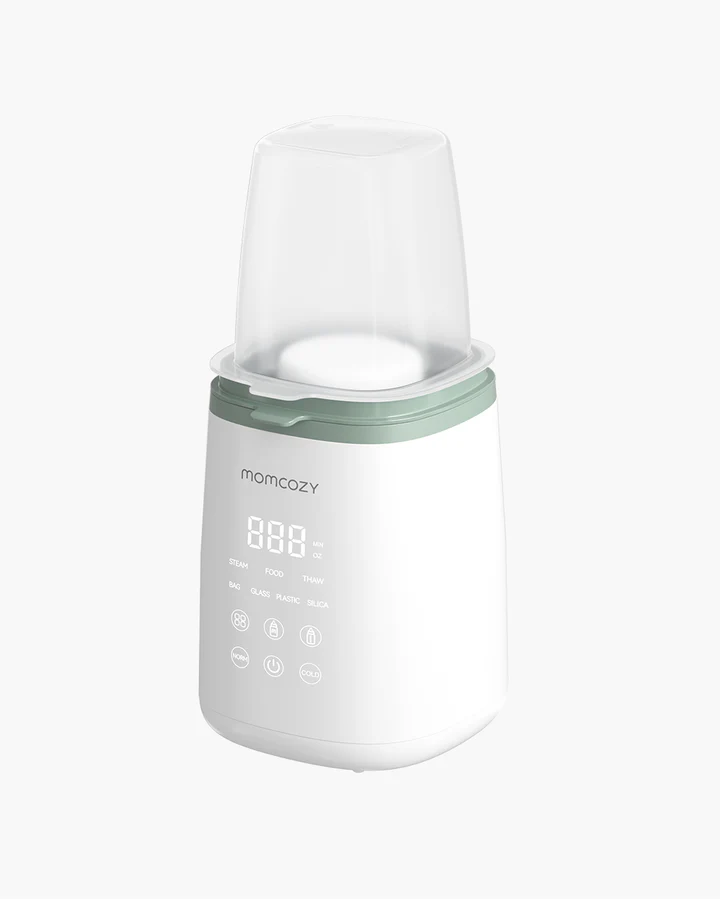
If you mostly feed at home and your baby already accepts milk cold or room temperature, a warmer is a nice extra, not a must-have. Families in that camp may want to compare a portable model with Momcozy’s 6-in-1 Fast Baby Bottle Warmer instead of assuming portability is the main priority. Both the CDC and Michigan State University Extension note that breast milk and formula do not need to be warmed before feeding.
But if your routine includes daycare drop-offs, road trips, long appointments, or frequent night feeds in another room, the convenience becomes easier to justify. A portable model also takes up less space than a larger countertop unit, which matters if your kitchen already feels crowded with bottles, drying mats, and pump parts.
Does it actually save time?
Yes, but think “helpful fast,” not “instant”
Most electric bottle warmers heat a refrigerated bottle in about 4 to 6 minutes, with some faster models landing closer to 3 minutes. Portable warmers usually take longer, often around 3 to 10 minutes depending on the amount of milk and how cold it starts.
That puts Momcozy in a useful middle ground. It is fast enough to smooth out a stressful feed, but not so fast that you should expect instant results every time. If your milk starts fridge-cold and you are warming more than a small bottle, build in a few extra minutes.
The bigger win is consistency in your routine
What parents often want is not just speed. It is one predictable step. Put the bottle in, choose the setting, wait, swirl, test, feed. That kind of routine matters when you are tired.
For that reason, the Momcozy is better thought of as a stress-reducer than a strict time-saver. On a chaotic day, removing even a little guesswork can be worth more than shaving off 2 minutes.
| Option | Best for | Typical warm-up | Main advantage | Main watch-out |
| Momcozy portable electric warmer | Travel, car rides, overnight feeds away from the kitchen | About 3 to 10 minutes depending on model, milk volume, and starting temperature | Cordless convenience and preset temperatures | Direct-contact parts need prompt cleaning; some models are limited for frozen milk |
| Standard electric bottle warmer | Daily home use near an outlet | About 4 to 6 minutes for many models | More set-it-and-go convenience at home | Still needs temp checks to avoid overheating |
| Warm water bath | Occasional warming at home | Varies | Simple, low-cost, no extra device | Less convenient when you are rushed |
Can it warm breast milk and formula safely?
This is the most important question
A bottle warmer only helps if it warms gently. The CDC advises against microwaving breast milk or formula because uneven heating can create hot spots that can burn a baby’s mouth. Michigan State University Extension also notes that breast milk should not be overheated above 104°F if you want to better protect its quality.
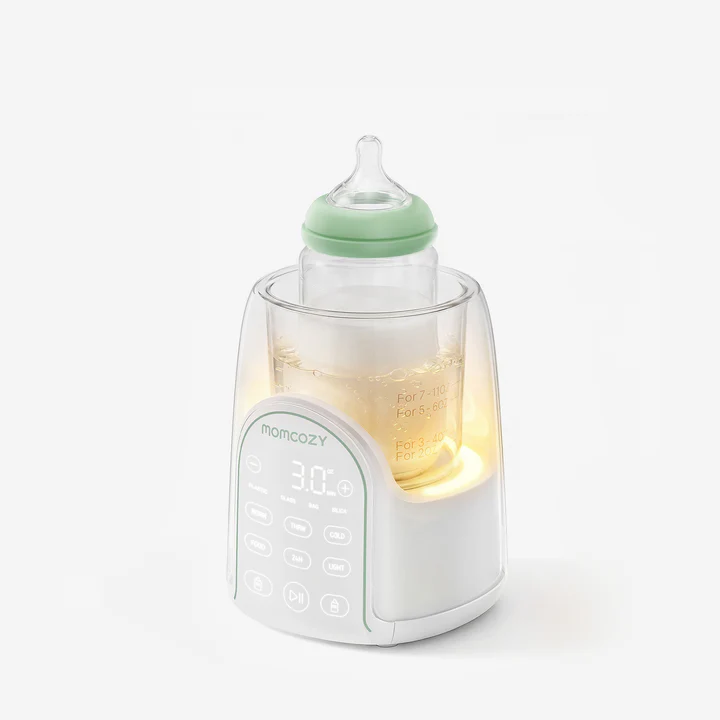
That matters with any electric warmer, including Momcozy. Third-party testing from BabyGearLab found one Momcozy portable model reached a measured max temperature of 118.9°F. That does not mean every bottle will overheat, but it does mean you should not trust the machine blindly.
A simple safe-warming rule
Use the warmer to heat, not to hold. Warm the bottle, swirl it gently, and test a few drops on your wrist or the back of your hand before feeding. If you warm breast milk often, using a small food thermometer can make things easier, especially while you are still learning how your warmer behaves.
For breast milk, gentle warming matters most. For formula, the bigger issue is avoiding hot spots and following storage rules closely. In both cases, never reheat the same bottle twice.
Normal versus red-flag use
Normal: the milk may look slightly separated after storage, especially breast milk. A gentle swirl is enough.
Red flag: the bottle feels noticeably hotter at the top than the bottom, steam is rising, the milk smells off, or the warmer overshoots the setting more than once. In that case, stop and cool the bottle before feeding, and check whether the unit needs cleaning or whether you are using the wrong setting for the bottle size.
What daily cleanup is really like
The warmer itself is not the hard part. Milk residue is.
One of the practical downsides in testing is that milk can contact the heating surface directly on some portable designs. That means you cannot leave cleanup for “later.” If dried milk sits on the plate or inside threaded areas, it gets annoying fast.
In plain terms: rinse or wipe the warmer parts right after use, before the milk dries. If the model uses adapters, check the threads and seals carefully. Those are the spots parents tend to miss when they are tired.
Bottle hygiene still matters more than the gadget
The CDC says bottles and bottle parts should be cleaned after every feeding. If items are still wet after washing, let them air-dry fully on a clean paper towel or unused dish towel. Do not pat them dry with a kitchen towel, because that can move germs back onto clean parts.
If your baby is under 2 months old, was born premature, or has a weakened immune system, the CDC advises daily sanitizing for extra protection. For older, healthy babies, careful washing after each use is often enough. That is an important difference, and it helps keep cleanup realistic instead of impossibly strict.
When parts are “dry enough”
This is one of those late-night questions parents ask themselves all the time. A good rule is simple: if you still see droplets inside the nipple, collar, valve, or bottle, it is not dry yet.
Fully dry parts matter because trapped moisture can encourage germs and mold. If a drying rack stays damp all the time, a clean towel or paper towel setup may actually be the simpler option.
Storage rules worth taping to the fridge
Breast milk rules
The CDC says freshly expressed breast milk can stay at room temperature, up to 77°F, for 4 hours, in the refrigerator for 4 days, and in the freezer for about 6 months for best quality, up to 12 months if needed. Once thawed in the refrigerator, use it within 24 hours. Once warmed, use it within 2 hours.
If your baby does not finish a bottle of breast milk, the CDC says to use the leftover milk within 2 hours, then discard it. That is one of the easiest rules to forget when you are trying not to waste milk.
Formula rules
The prepared formula does not need to be warmed. If you do warm it, use it within 2 hours of preparation and within 1 hour from the start of feeding, per CDC guidance. After that, throw out what is left in the bottle.
For powdered formula, refrigerate prepared bottles that you have not started feeding within 24 hours. If your baby is younger than 2 months old, was born premature, or has a weakened immune system, formula preparation needs extra care because powdered formula is not sterile.
Is the Momcozy worth it?
It is worth it for the right parent
The Momcozy bottle warmer makes the most sense if your real problem is location, not just temperature. Parents who feed on the go, pump away from home, or do lots of overnight bottles in spaces without easy kitchen access are the clearest match.
It is less compelling if your baby already drinks milk cold, if you mostly warm bottles at home near a sink, or if you want the easiest possible cleanup. In that case, a simple warm water bath may do enough without adding one more device to wash.
The best version of this product is a realistic one
This is not a magic shortcut. It is a convenient tool. Used well, it can make feeds smoother and less frantic. Used carelessly, it can overheat milk, leave residue behind, or tempt you to stretch storage times because the bottle “still seems fine.”
That is why the best review answer is also the most practical one: the Momcozy is a good fit for busy parents who value portability and routine, but it is only “best” if those are the problems you actually need solved.
FAQ
Q: Do I need to warm breast milk or formula at all?
A: No. Both can be served cold or at room temperature if your baby accepts them. A warmer is about convenience, not nutrition.
Q: Can I leave a bottle in the warmer until my baby is ready?
A: No. Warm the bottle, test it, and feed it. A warmer should not be used to hold milk for long periods.
Q: Can I warm the same bottle twice if my baby only drank a little?
A: It is safer not to. For formula, discard leftovers within 1 hour after feeding starts. For breast milk, use leftovers within 2 hours, then discard.
Practical Next Steps
If you are leaning toward the Momcozy, use this checklist to make the decision easier:
- Decide whether your main problem is travel convenience or just warming speed at home.
- Check that your bottle style or adapters match the model you are considering.
- Plan for real warming times of several minutes, not instant results.
- Test milk every time, especially breast milk, and keep warm gently.
- Clean bottle parts after each feed and wipe the warmer promptly before milk dries.
- Sanitize daily if your baby is under 2 months old, premature, or medically fragile.
- Keep storage rules visible so you do not guess when you are tired.
For many families, that is the clearest verdict: the Momcozy bottle warmer is a practical helper, especially outside the kitchen, but the real win comes from using it with simple, steady feeding and cleanup habits.


