
Inside the 100-Square-Foot Kitchen Where the Menu Changes with the Morning Tide.
By Dolores Quintana
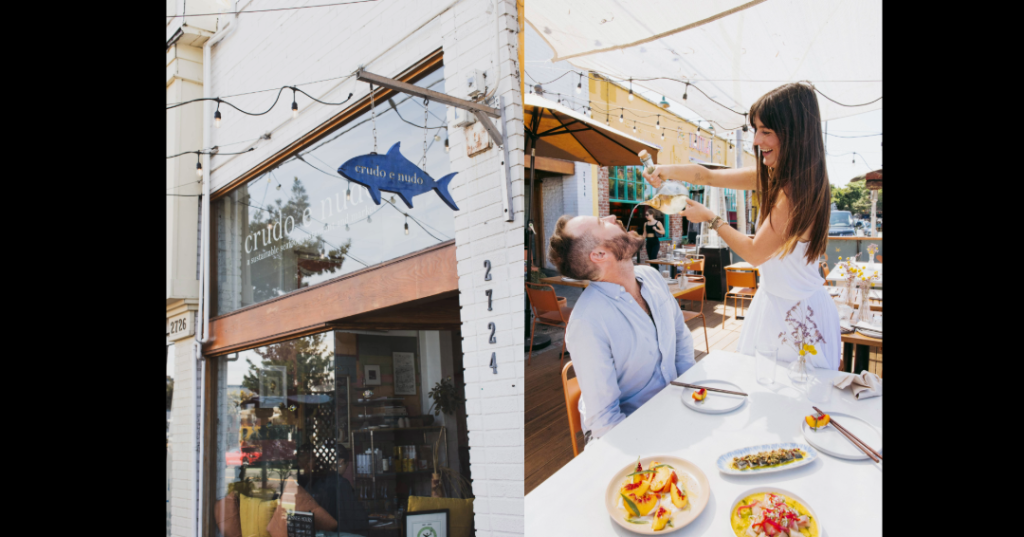
Crudo e Nudo, the sustainable Santa Monica restaurant that serves local fish and seafood and natural wines, is there for you. Open from noon until 10:00 p.m. daily, it is an excellent place for date night or just to relax with a great wine and some Santa Barbara octopus.
For the fifth anniversary of the restaurant, I spoke with chef and owner Brian Bornemann, a Santa Monica local, about the Crudo e Nudo philosophy and what drives his dedication to sustainability in fresh fish and seafood from the Pacific Ocean, and the wines his restaurant serves, from a full spectrum of different colors and textures.
When he talks about sustainability, it is more than just a talking point, but something that extends to his life and his employees’ lives. It is the importance of variety in our lives as well as our food.
Dolores Quintana: I’d like to start by asking how you feel or what it means to you to be hitting your fifth anniversary with Crudo e Nudo in Santa Monica?
Brian Bornemann: It means a lot because I grew up on the Westside, and as a kid, I remember walking down to Main Street and to the beach. I didn’t really have dreams of owning a restaurant in the town where I grew up, but it’s very cool to be back here and be working in a community that feels like home. It’s also a bit of a trip because Crudo started as a pandemic survival mindset, actually, at first. To see it grow into what it is, and now be hitting its fifth year, and we had our busiest January ever this year.
We’ve had more business this year than we have in recent times, so our sales are the best they’ve been. We’re really grateful for all the neighborhood support and how people appreciate what we do. I’m just grateful. We’ve seen so many other restaurants, like a community of other ones, have had big openings and closures since we started. We’re just really grateful for the little magic that keeps us trucking along.
Dolores Quintana: That’s awesome. Could you tell me a little about the ethos of Crudo e Nudo and what your reason is for you to cook and oversee this restaurant? I don’t think people really think that, oh, well, chefs do this for this reason, but there is, I find more often than not.
Brian Bornemann: Thanks for asking. I mean, the majority of restaurants out there, right, are—yes, a chef is cooking there, and they have a reason for cooking, but their reason to be cooking is aligned with the restaurant’s functionality rather than the reason for its existence. It’s rarely aligned.
Generally, you have somebody who’s passionate about cooking and who’s doing it for a reason, but it’s turned into a job to do, to try and execute something that is really controlled by ownership interests. I’ve often likened it to a yacht, right? Let’s say the chef is the captain of a yacht, and you get to be in charge of the yacht, in charge of where it’s going, and everything to a degree. But ultimately, if you’re the captain of a yacht, that thing is going to be moving based on what the people who actually own the yacht and rent it out want it to do.
So you’re determining where the ship is going only insofar as the ownership allows you to move it to. Crudo is like taking the dinghy out, but you don’t really control where you’re going at all. That’s most restaurants, that’s most chefs’ experiences, that’s most times you go out to eat, you are getting food from someone who’s captaining someone else’s yacht.
Dolores Quintana: Right.
Brian Bornemann: The whole point of Crudo was to choose because I had done that before. Crudo was “let’s just have our own dinghy that I can control and have full say over what we do and how we do it.” I’d rather have my own dinghy than be captaining someone else’s yacht. By doing that, we’re able to do things that frankly other people are not able to do. If I were captaining someone else’s yacht, we wouldn’t be able to focus on just local seafood.
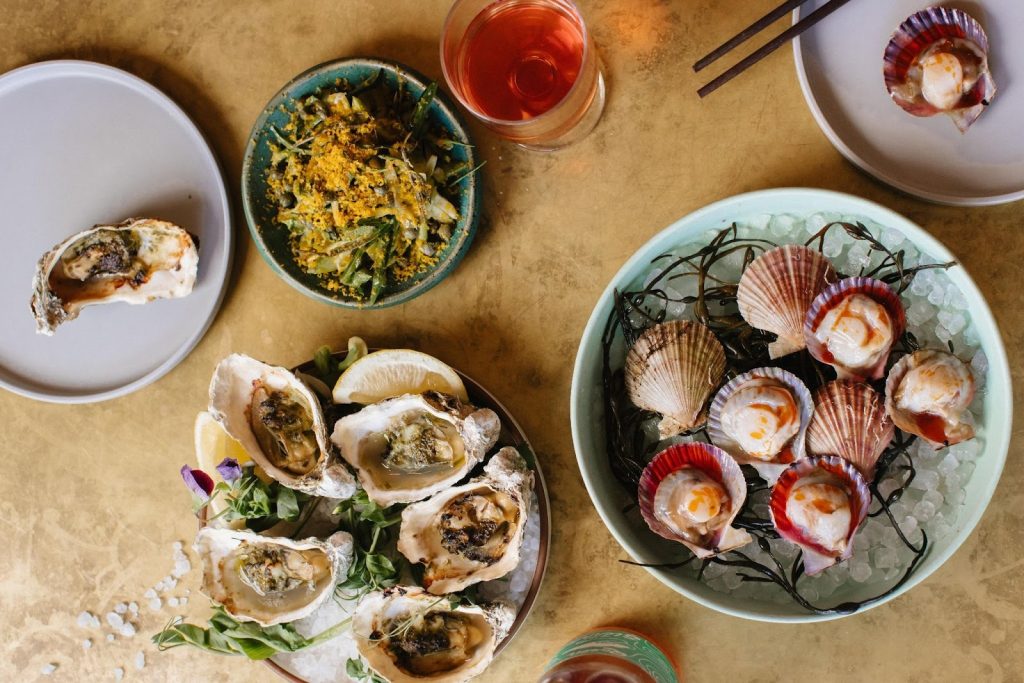
Somebody would insist there has to be salmon or their favorite hamachi, right? So we’re able to focus exclusively on local fish, which basically nobody does in this city. Growing up here and sitting on PCH and you’re eating Maine lobster or East Coast clams or Spanish octopus or Alaskan halibut while you’re looking at the Pacific, and that just never made any sense to me.
So by completely eliminating that kind of East Coast nostalgia on seafood or Mexican mariscos or Japanese sushi, we’re able to create like a raison d’etre for how we want to source, eat, and enjoy—both in the ecological sense but also in the culinary sense, like what is California seafood cuisine? How do we differentiate that from those three major seafood styles?
By saying we’re only doing local, we then don’t fill any places on our menu with commodity items, like chicken, French fries, or a burger, or anything. We work with wavy turban snails and whelks. We work with local barracuda, mackerel, and sardines, and have that forced creativity of let’s take what the sea gives us and make a menu out of that.
That’s why the menu exists on a chalkboard, whereas most other restaurants you’re like building a menu out ahead of time, you’re then ordering proteins to meet the goals of that menu, and those proteins are generally coming from somewhere very far afield. They’re coming to you through planes, trains, and automobiles, and so the carbon footprint of most things that people serve in Los Angeles is very high.
Our goal really is to serve dayboat local fish; it’s by a significant margin a fraction of the carbon footprint of anything else that you could possibly get. So all of our fish comes to us by truck, literally driven down by one person. When I say truck, I mean a Toyota Tundra.
Dolores Quintana: Not a semi.
Brian Bornemann: Not a semi. So every day, can we provide it in a consistent way, and that’s what we do. We’re open seven days, we’re open 12 to 10 instead of doing an 8-to-5 because we want people to be eating Southern California fish as the primary. We want more people to be eating local abalone. We want more people to be eating purple uni instead of red uni.
Which is why we have, like, the four-day work week and just try to set things up to kind of avoid a lot of the traditional pitfalls of restaurant hierarchy.
Dolores Quintana: Yeah, where you’ve got like someone who gets one day off on a Monday, and they’re just riding that big wave of exhaustion.
Brian Bornemann: Yeah, I mean, most places like push their salaried managers to a point of burnout and frustration, and it ends up being a cycle that ends up on repeat. We have no salaried managers; everybody works hourly, and they all have three days off. That’s just a big part of how we want to feel good about doing what we’re doing.
Dolores Quintana: Well, in a way, it seems like the core of your model is being local and sustainability. With that model, the four-day work week, you’re actually doing sustainability for your employees so they don’t burn out.
Brian Bornemann: Exactly.
Dolores Quintana: Yeah, so it’s sustainability in a lot of different areas.
Brian Bornemann: Exactly. Everybody loves talking about sustainability in terms of ecology, but if we weren’t sustainable, we would have closed by now. Right? Sustainability also means being able to keep the doors open. Because if you can’t do that, you’re not very sustainable.
Dolores Quintana: That’s a good point.
Brian Bornemann: Whatever the definition is. Being sustainable for the community, for employees, and for the venue. We don’t push to make things harder than we need to; we don’t try to print menus multiple times a day. We do it on a chalkboard, we allow for the wabi-sabi of nature and life to kind of guide the process, and that’s the goal.
Dolores Quintana: You are restricting what you can do based on what’s available in our local ocean areas, as well as on any specific day. I think that some people might think, ” Oh, that’s too hard,” but I think, and let me know if this is true, is it something that makes you have to be a little more creative about what you can do with the menu, every day, every week, because you have to think of new things?
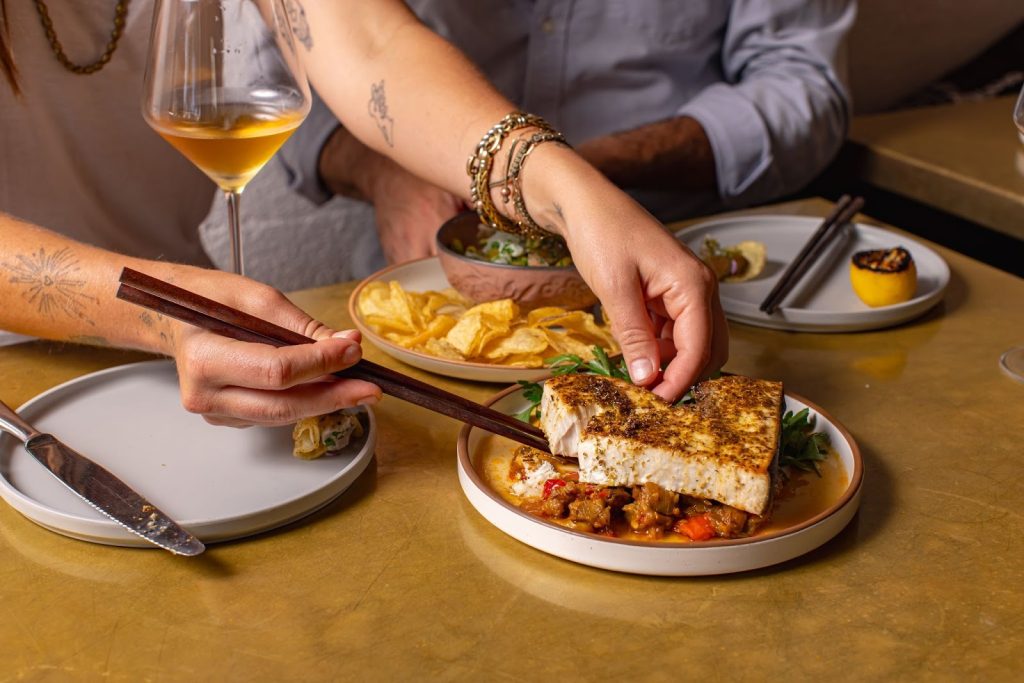
Brian Bornemann: Yeah, yeah, and, of course, there’s like a version of it that we could set up where it could be set it and forget it, but that’s not the goal or the functionality we want, you know, creativity by collaboration. We want to welcome in new products and find new ways to cook them, pair them, and dress them. Yeah, it definitely is a forced creativity that is a big part of what we do as well, too.
Dolores Quintana: On your current menus, what are the dishes you feel strongest about? Or what are the dishes that you would like people to hear about and get excited about?
Brian Bornemann: One thing that’s really exciting for us right now is that we are getting this local bycatch octopus from Santa Barbara. The reason this is so exciting is that we’re pretty much the only—I think we’re the only ones using it. Every other chef in the city is or any city is buying a frozen Spanish product or a frozen New Zealand product, where they’re getting the same kind of octopus every time.
The giant Pacific octopus, since we have no fisheries for them, or an official way to catch them and distribute them, they only come up when we’re raising lobster traps in the winter, and they’re just in the lobster trap. Either it goes to waste, or we use it.
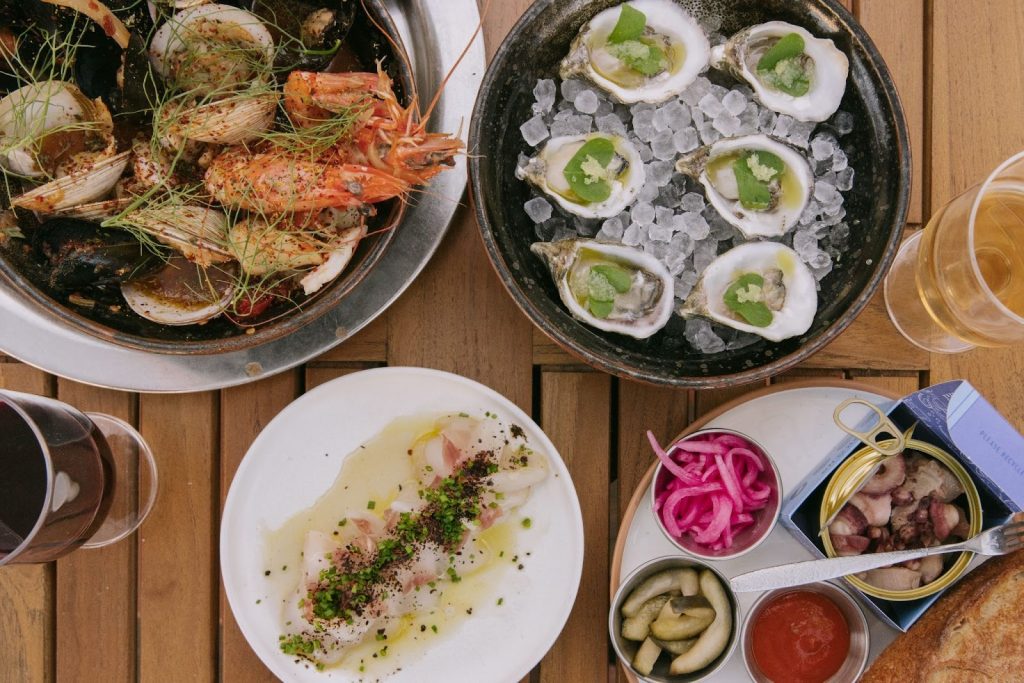
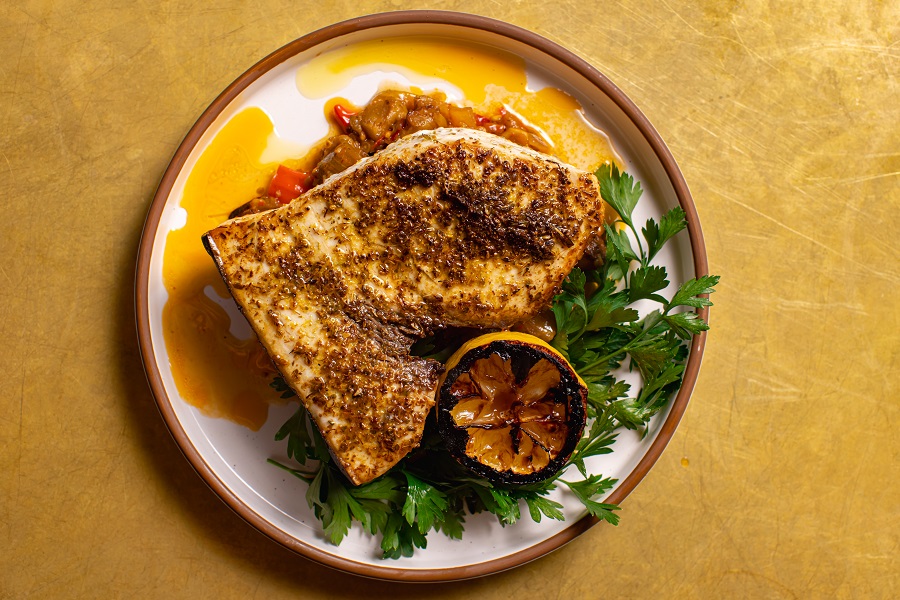
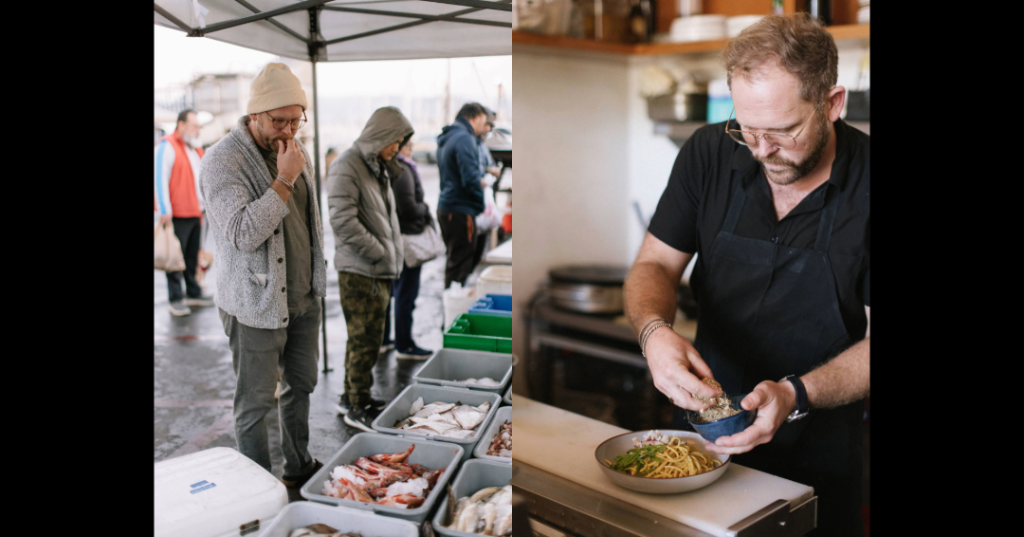
This week, we had a 70-pound giant Pacific octopus that we steamed, and then we chilled, and then we sliced it really thin so it’s like a carpaccio, but it’s cooked, and then we top that with basil oil, salsa macha, capers, and some lemon. Stuff that looks really simple, but the story around getting it out there, and then the end result of flavor and texture, is really exciting. Another thing that I always love talking about is that we’re a very small shop, we have like a 100-square-foot kitchen, so the only pasta that we can make fresh is gnocchi.
Dolores Quintana: Really?
Brian Bornemann: We make potato gnocchi fresh every single day and have it ready for dinner. Right now it’s, and we’re moving into spring, we’re doing a version of our gnocchi with what we call a fish ’nduja sausage. We make a spreadable fish sausage out of chili, paprika, garlic, and all the bits of the fish that don’t make pretty plates. We cook that down like sausage in the pan and then add peas, white wine, mint, green garlic, etc., and so you get this very fresh spring kind of dish, but also a spicy version of gnocchi, which is us using trim and everything. It’s really cool.
Dolores Quintana: That sounds great. I think it’s pretty rare to have gnocchi made with seafood, at least it is in Southern California.
Brian Bornemann: A lot of gnocchi is from the north of Italy, but we love doing gnocchi throughout all of winter, that season just ended, and now we do the fish ’nduja version. We do a version with mussels, we do a version with asparagus. We love pairing gnocchi with a whole variety of seafood and wild chanterelles when they’re in season, too.
Dolores Quintana: It sounds great, and that’s why I wanted to get like your take on what people should really look for when they come to the restaurant, particularly now that you are doing the fifth anniversary event.
I wanted to ask about the wine because you obviously find wines that fit the sustainable model. I wanted to ask about your wine program.
Brian Bornemann: We focus almost exclusively on natural and organic wine. We’re more concerned about farming practices than we are anything else, but we do always look for things that drink well with good acidity and good minerality and things that go well with fish and olive oil. We really focus on everything from white to orange. There’s just so much in that world where most by-the-glass lists are pretty similar from place to place.
You have a chardonnay, a sauvignon blanc, a chilled red, a white, a rosé, and a big red. That’s pretty much what you see everywhere. For us, because of what we do and how we focus on natural wine, which is also on the chalkboard menu, it changes constantly. We’ll have two ramato wines, two orange, two rosato—different variations of light in different levels of texture-light versus mineral-light versus acid-light, as we get really to showcase the spectrum of different ways that you can interact with basically a not-red wine.
Dolores Quintana: Of course.
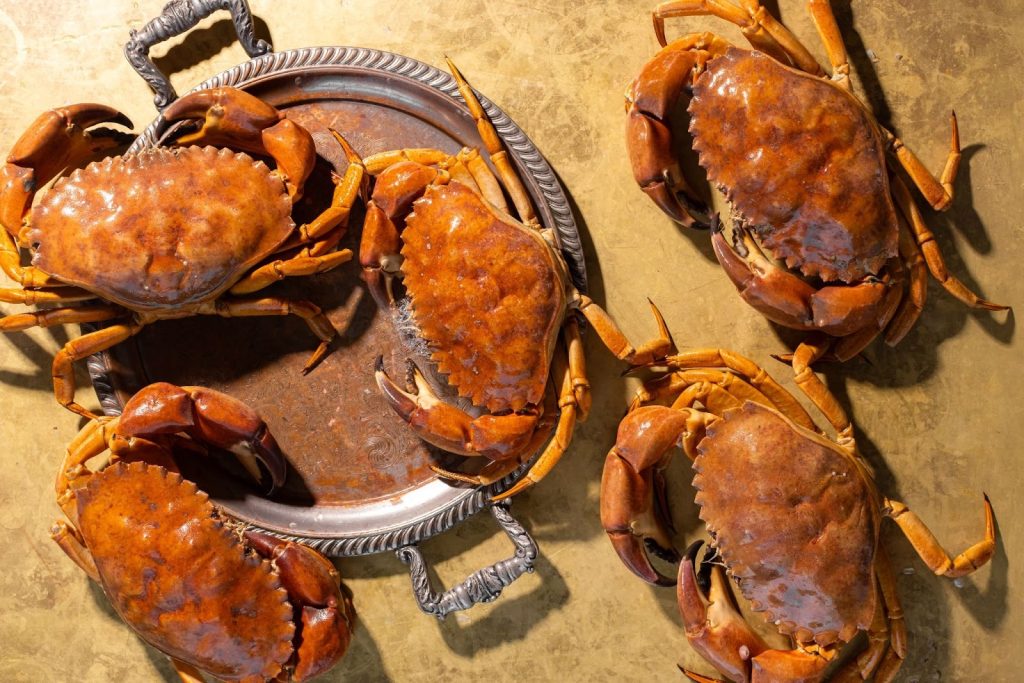
Brian Bornemann: We do have a couple of red wines in general, but the spectrum of color in between white and red is way more vast than I think most people realize. We really like to highlight all those different colors and flavors and textures in between that pure white and that deep red. So, we really try to push boundaries with a natural wine list as well, where I made one last year that’s essentially half skin-contact or orange sauvignon blanc, and then the other half is red grapes done as a rosé. So it’s between an orange and a rosé.
We really try to ride that line into something really textured, but we don’t carry low-hanging fruit. We never align ourselves with Pinot Grigio or Sancerre because it’s not the primary reason we exist. If you want a steak, a burger, or a chicken, there are so many restaurants you can go to. We don’t really feel like we have to do that. We always try to have educational moments with people who come up, and they say, “Well, I don’t really get this,” and then we direct them towards what we think matches their perspective.
Dolores Quintana: That’s so good too, because that way people can step outside of the normal kind of thing that they do when they go to a restaurant and expand into something that you’re pretty sure they would like, but maybe they don’t have any experience with.
Brian Bornemann: It’s a chance for educational moments, like “well, I don’t really like Sancerre,” so we’ll direct them to something else with tropical notes and high acidity. At the end of the day, sustainability in terms of what we produce, whether it is fish or veggies or wine, a really big part of sustainability is diversity, right?
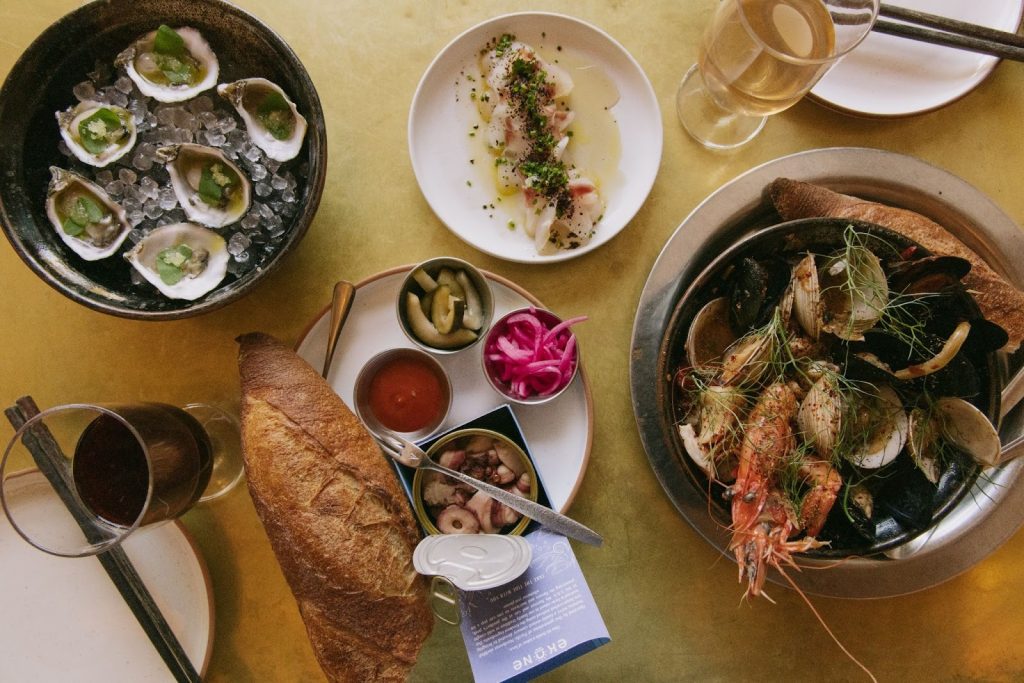
If you’re eating the same salmon, drinking the same cabernet sauvignon, and eating the same broccoli every single day, those things are having big impacts because people ask for them over and over and over again. That’s how we get into monoculture situations or overpopulation of a type of fish like salmon, which should be eaten only seasonally for a couple of months out of the year, and now people are eating it all year round.
In general, whether it’s seafood or wine, they both adjust towards more of the bigger diversity of things that are available to them rather than just repetitive options of the same things they already know.
Dolores Quintana: You have the seasonality, which is part of your biodiverse sustainable model because people are really used to, particularly in California, having strawberries all year, but strawberries are seasonal too. So you’re not getting the same quality for the entire year. You’re getting a strawberry that wouldn’t normally be here.
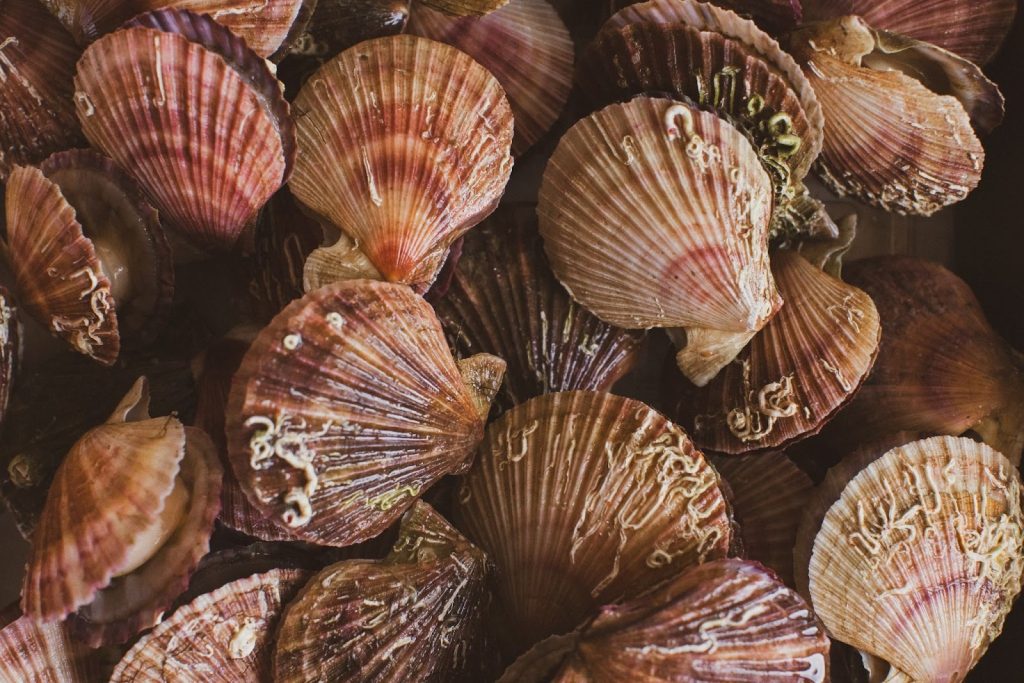
Brian Bornemann: Getting things that are at the peak of their season is always going to be a totally different experience than hitting a commodity product that’s just hydroponically grown or something.
Dolores Quintana: If there’s anything that you’d like Santa Monica or the Westside to know about Crudo e Nudo and what you’re doing, what would you say?
Brian Bornemann: Honestly, people just keep telling me like, “Oh, we didn’t know you were open for lunch.” It cracks me up that we’ve been doing the same hours for five years. But I think often people see us as this kind of big date night spot or celebratory spot, or with the high-end, nice wine, we’ve got this tasting menu and all that.
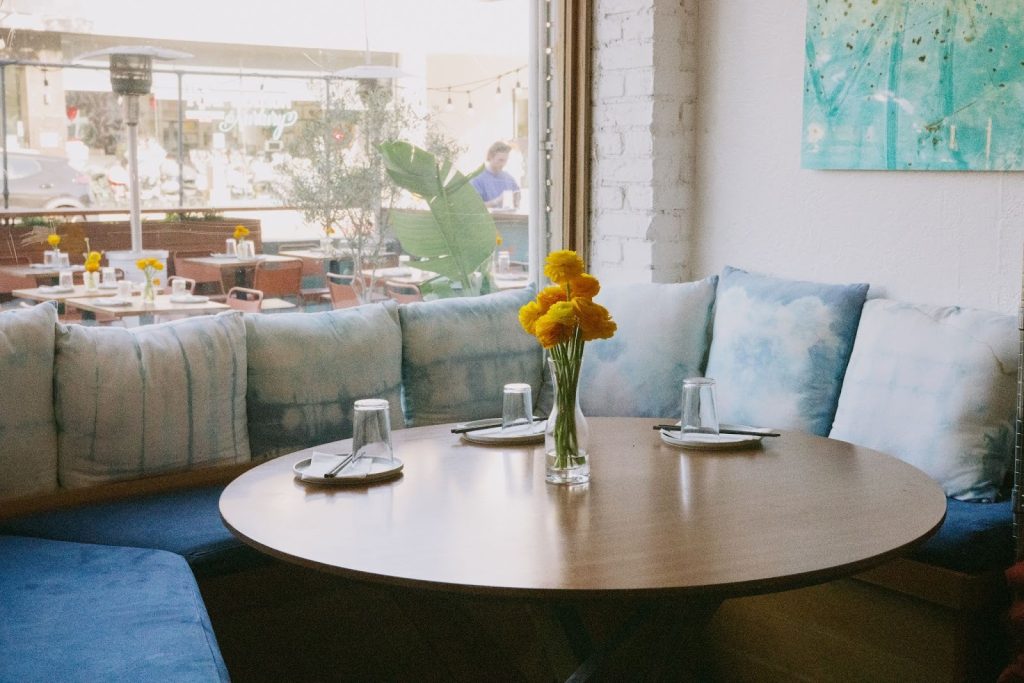
But really, the reason we’re open most of the day and night is so you can come in and just order six oysters for happy hour and a $10 glass of wine between 3:00 and 5:00 p.m. every day, and just hang out and work on your computer. There’s no need to use it as such a special event spot. We really try to have a very affordable happy hour as well as a lunch special most days.
We just want to be that place where you can roll in, get a great glass of wine in the late afternoon at any point in the day, as long as it’s after noon. We just want people to understand that we’re here for more casual drop-ins, you know, post- or pre-beach, as well as that more sophisticated dining experience at night.


