Part Two. A bill narrowed to one city and wired to a deadline in 2029 is a foothold — and what comes after is a coast that belongs to all of us.
The first half of this story showed that Santa Monica’s permitting delay was self-inflicted: the city never finished the coastal plan that would have ended it, and has now, under public pressure, promised to finish it by 2027. That promise should make AB 1740 unnecessary. And yet the bill is still moving through Sacramento — cut down, but alive, and built around a deadline in 2029.
To understand why, you have to look at what the bill became, and who that deadline is pointed at.
What the amendments took away
AB 1740 did not begin as a Santa Monica bill. As first written, it would have let more than a dozen dense, transit-rich coastal cities skip Coastal Commission permits for a wide range of projects, with the arrangement running all the way to 2037. In plain terms, it was a statewide loosening of coastal oversight.
That version is gone. One committee at a time, the bill shrank: from a dozen cities to a single one, Santa Monica; from a broad reach of coast to one narrow band between Wilshire and Pico Boulevards; from 2037 to 2029. The sponsors lost most of what they came for. What they kept is smaller, and more telling: a foothold. The author, Assemblymember Rick Chavez Zbur, has been candid about it — he has said the single-city limit was meant to let other cities be added “in another year,” that the bill’s “basic architecture remains intact,” and that he views it as a first step toward reforming the Commission. That is not the language of a retreat. It is the language of a plan.
An onerous deadline
Look closely at what the 2029 date actually does, because it is more cunning than a plain expiration. The housing exemptions in the Wilshire–Pico band are tied to the coastal plan: if the Commission has not approved Santa Monica’s new plan by the middle of 2029, the exemptions switch on. If it does approve the plan, they switch off.
Read that twice, and notice who pays for failure. The city spent thirty years not finishing its plan — yet the penalty for an unfinished plan in 2029 does not fall on the city. It falls on the guardian, which loses its authority over the corridor. And the design quietly rewards delay: because the exemptions appear only if the plan is not done, anyone who wants those exemptions now has a reason to want the plan to fail. A city that struggled for three decades to finish this plan has just handed its most powerful allies a fresh reason to hope it struggles a little longer. That is what makes the deadline an onerous thing rather than a neutral one. It is less a clock than a loaded one, pointed at the only independent referee still on the field.
The dangling carrot
Which brings us to the puzzle at the heart of the whole affair. The city has promised, in writing, to finish the plan by 2027. The deadline does not arrive until 2029. If the city keeps its own word, the exemptions never take effect at all. So why fight so hard to keep them?
Because the exemptions were never really the prize. The prize is the precedent. A law that carves even one city, even briefly, out of Coastal Commission review settles a larger question: that the Legislature is willing to do this at all — which is exactly what the original statewide bill could not get done. And the 2029 deadline earns its keep twice over. It keeps the fight alive on the calendar, and it manufactures, in advance, the grievance that will sell the next bill. If the plan is not certified by 2029, supporters will say the exemptions prove the model works and should spread. If it is certified, they will say the bill was the pressure that finally forced Santa Monica to act, and that other cities need the same push. Either way, the conclusion is “more.” A measure built so that success and failure both argue for expansion is not an ending. It is a furrowed seed.
A fair hearing
It is worth being fair to the people on the other side, because many of them are entirely sincere. They believe the Coastal Act, written in the 1970s for a wild and undeveloped coast, fits a dense, transit-rich, built-out city poorly, and that routine projects should not have to wait years on a distant state agency. Real environmentalists and housing advocates hold this view, not only developers, and you can agree with a good deal of it. But a precedent is not judged only by the intentions of the people who set it. It is judged by what it lets the next person do.
What it looks like when the guardian is gone
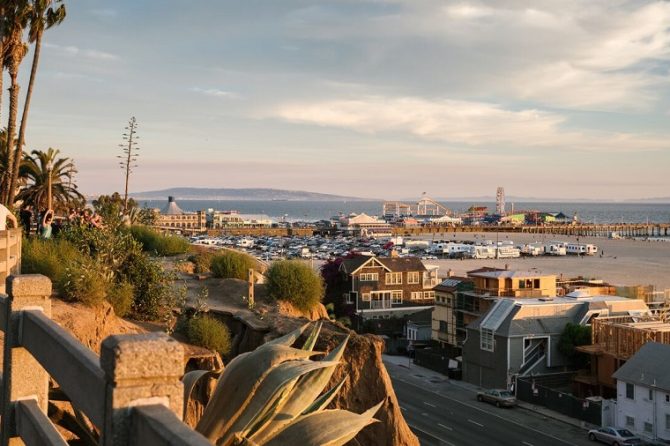
And this is where the story reaches past Santa Monica, to anyone who has ever driven down to the ocean. Picture an ordinary afternoon a few years from now — first in some coastal town that is not yours, and then, eventually, in one that is. You go down to the beach the way you always have, and the lot where you used to park is gone, replaced by housing that needed no one’s blessing but the city’s. Or you walk the street that always opened onto a bright wedge of water, and the water has disappeared behind a row of towers built right up against the inland edge of the sand. None of it was done in secret. All of it was permitted, in broad daylight, by a city that had quietly been freed from having to ask anyone else first.
The line the bill would set aside: coastal jurisdiction is measured 300 feet inland from the bluff edge — across Ocean Avenue and into the first blufftop lots — while the shoreline migrates back toward it. (14 CCR §13577(h).)
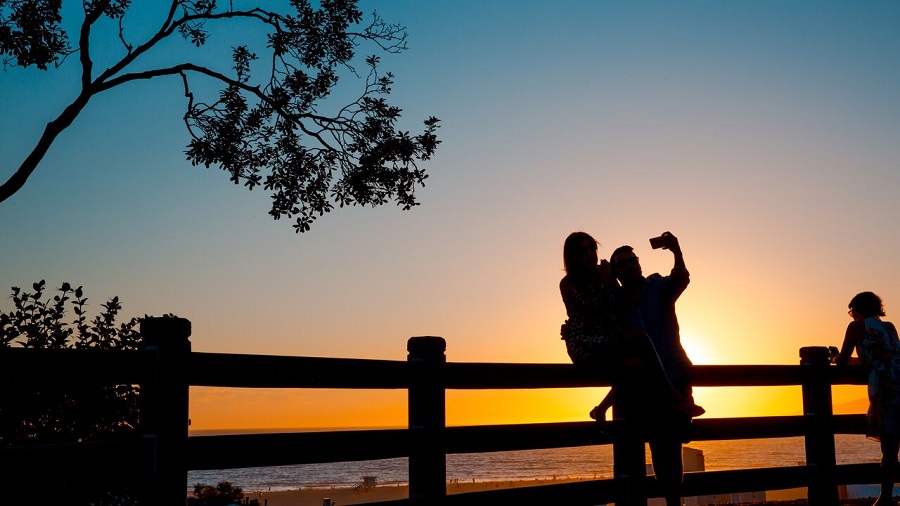
Here is the cruel part. By the time you can see what is missing, it has already been built. The view does not come back. The parking, and the easy access it gave, does not return. That is precisely the harm the Coastal Commission was created to prevent — not because state officials are fond of paperwork, but because the public’s share in the coast is easy to give away one project at a time, and very nearly impossible to win back. California’s voters understood that in the 1970s. They posted a guardian so the coast could not be quietly handed off, city by city, decision by decision.
AB 1740 is the first city. Whether it remains the only one is the real question on the table — and it will not be Santa Monica alone that answers it.
The city always had a clean path: finish the plan, keep the guardian, end the delay it made for itself. It has now promised to take that path by 2027. If it means the promise, the bill is unnecessary. If the bill outlives the promise, then every Californian who has ever stood with their feet in the sand is entitled to ask what it is being kept alive to do — and to make sure the answer is not written without them.
Next: Part Three — the bluff, the beach, and the coast the sea is moving toward.
Jack Hillbrand, Architect
For S.M.a.r.t.: Santa Monica Architects for a Responsible Tomorrow.
Jack Hillbrand AIA, Landmarks Commission Architect; Dan Jansenson, Architect (former Building & Fire-Life Safety Commissioner); Robert H. Taylor, Architect AIA; Mario Fonda-Bonardi, Architect AIA (former Planning Commissioner); Sam Tolkin, Architect (former Planning Commissioner); Michael Jolly ARE-CRE; Phil Brock (SM Mayor, ret.); Matt Hoefler, Architect NCARB; Heather Thomason, community organizer; Charles Andrews, columnist/journalist; Bruce Leddy, Human Services Commissioner and NOMA Co-Chair.