
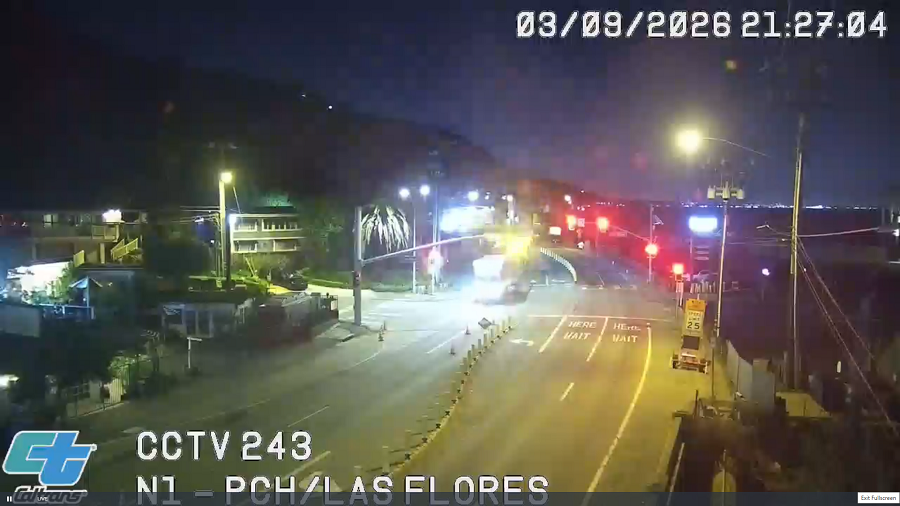
New Caltrans video feeds from Pacific Coast Highway allow the public to monitor traffic.
Real-time traffic video from Pacific Coast Highway in Malibu is now available to the public through the Caltrans website, giving both officials and motorists a new way to monitor conditions along the busy coastal route.
The live feeds come from a network of closed-circuit television cameras installed as part of Malibu’s Pacific Coast Highway Signal Synchronization Project. The cameras allow traffic operators to observe roadway conditions in real time and quickly identify incidents such as crashes, stalled vehicles, or traffic backups.
Officials said the video system also helps traffic managers respond more effectively by coordinating emergency services and adjusting signal timing when problems arise.
The cameras play a role in active traffic management along the corridor. By visually confirming traffic flow, operators at Caltrans’ Traffic Management Center can modify signal timing to reduce stop-and-go congestion, control speeds, and improve the overall movement of vehicles along the highway.
City officials said the monitoring system also contributes to safety by helping protect motorists, pedestrians, cyclists, and emergency responders traveling along the route.
The cameras were installed through Malibu’s PCH Signal Synchronization Project, a $19.1 million effort completed in December 2024. The project linked 12 traffic signals between Topanga Canyon Boulevard and John Tyler Drive into a coordinated “smart corridor” designed to improve traffic flow.
You can watch the live traffic conditions video feed here. Read here to learn more about the PCH Signal Synchronization Project. You can actually watch such cameras all over California.
Through the system, Caltrans operators can make real-time adjustments to signal timing along the highway to improve mobility and reduce speeds.
City leaders described the project as a major component of Malibu’s broader strategy to enhance safety on Pacific Coast Highway, one of the state’s busiest and most heavily traveled coastal roads. The effort was carried out in coordination with Caltrans, law enforcement agencies, and regional transportation partners.


